

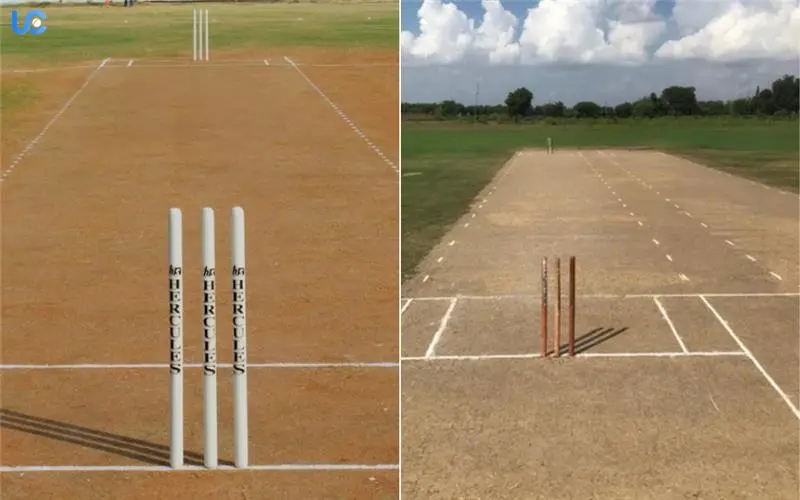
Prior to the Toss, a pitch report comprehensively covers specific details about a cricket pitch. There are so many cricket stadiums in the world, but one major aspect to differentiate them is the type of cricket pitch. The characteristics of different types of soils offer unique behaviour, offering optimum playing conditions for batters, fast bowlers and spinners during various stages of the match.
A captain’s decision to choose batting or fielding first also depends on the type of soil. Therefore, it is important to know what to expect from various types of pitches. Let’s understand how red soil and black soil pitches differ, visibly impacting the game.
Red Soil Pitch
- Red soil contains a large proportion of sand content, which dries quickly, and the clay content is minimal.
- Playing on a pitch with red soil presents a challenging contest between bat and ball as both batters and pacers enjoy bounce early on.
- A red soil pitch presents more hard surface, generating plenty of bounce. It is often difficult for a batsman to handle unpredictable variation in the bounce.
- A cricket pitch with red soil erodes fast, and it leads to uneven bounce while spinners enter the game later on. A batter struggles to define the trajectory of the ball.
- When the red soil pitch starts deteriorating, the spin bowlers can take more advantage of the turn with considerable domination during the later parts of the match.
- When erosion occurs in the red soil pitch, loose soil and dust come out. This condition makes it difficult for a batsman to have a clear vision of the ball, affecting how the ball moves off the track.
- The fast bowlers take a back seat once the red soil pitch turns dry after enjoying an initial advantage. When the match progresses, the ideal conditions no longer exist for the pacers due to wear and tear on the pitch.
Read Also:- Ben Stokes Ruled Out: England Announce Playing XI for 5th Test
Black Soil Pitch
- Black soil has a different composition from red soil, with a richness in clay content.
- Black soil has better retention of moisture, making it pleasant for spinners who take advantage later in the match. Those batters with expertise in playing slower deliveries and lower bounce can bat well.
- The tendency of a black soil pitch is to generate a steady bounce. This situation brings challenges for batsmen during the latter part of the match due to the slowness persisting in the game.
- A black soil pitch shows resistance to erosion because of its granular composition.
Conclusion
The Red soil pitch and Black soil pitch offer contradictory qualities, structure and outcomes. Analysing the pitch behaviour is critical for understanding the dynamics of a match during several stages. It can be helpful for devising tactics and laying out a plan for every match.