
Cricket is often synonymous with speed, power, and precision. Yet, amid the thunder of fast bowlers and the brilliance of power-hitters, there’s a curious counterpoint: the slowest ball in cricket. Far from being a gimmick, the slow ball – a sudden dip in pace – can be devastatingly effective, unsettling the most watchful batsman. This article explores the slowest deliveries ever recorded or famously executed, examines the masters who bowled them, and reflects on why the snail-paced ball remains a strategic weapon in modern cricket.
What Counts as the Slowest Ball?
While cricket doesn’t officially track the “slowest ball” as a record discipline, several deliveries stand out – some measured by speed, others by sheer deceptive brilliance or rarity in fast-bowling arsenals.
Based on available records:
- Leigh Kasperek (New Zealand, 2017): The measured slowest ball in international cricket -clocked at just 38 km/h – delivered during an ODI against Australia in Mount Maunganui.
- Majid Haq (Scotland, 2015): Another extremely slow delivery, recorded at 41.6 mph (~65 km/h).
- Jasprit Bumrah (India, 2018): A sharp slower yorker delivered at 113 km/h, bamboozling Shaun Marsh during the Boxing Day Test in Melbourne.
These recordings offer empirical contrast to the typical pace of fast bowlers, which often exceeds 140 km/h, making them particularly notable.
Other Notable Slower Balls by Speed or Deception
Curtly Ambrose vs Ian Healy (1993)
In a rare slower delivery, Ambrose caught Healy off-guard, dismissing him with a looping delivery. The shot—and Healy’s stunned reaction—became an iconic moment in cricket folklore.
Chris Cairns vs Chris Read (1999)
In a Test at Lord’s, Cairns bowled a deceptive slower ball that Read misread—thinking it was a beamer—and ducked early, only to watch the ball dip sharply and crash into the stumps.
Aaqib Javed vs Mark Greatbatch (1992)
During the 1992 ODI World Cup semi-final, Aaqib improvised a back-of-the-hand slower delivery that bamboozled Greatbatch, bowling him out with a brilliantly disguised slower ball.
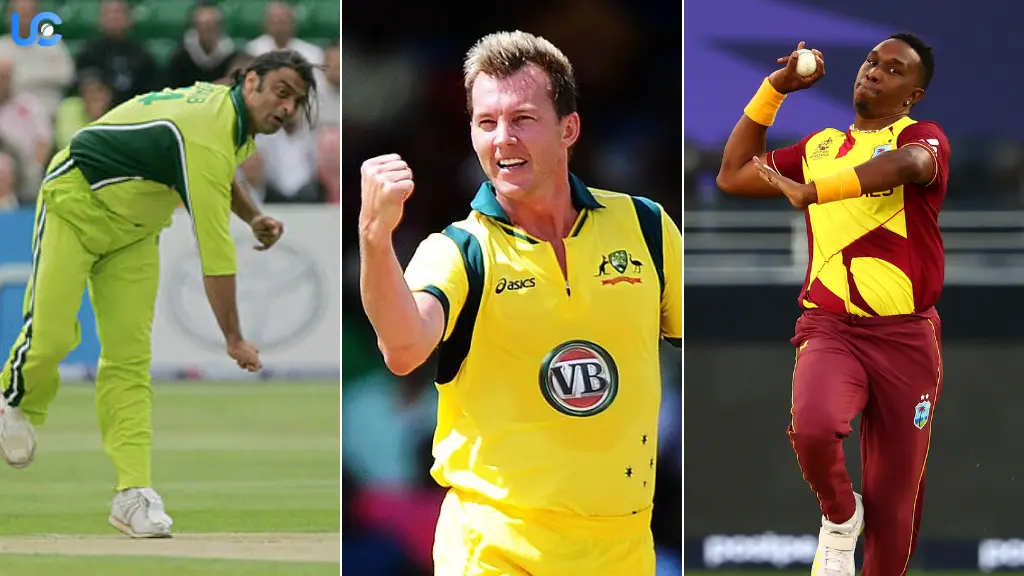
Shoaib Akhtar vs Michael Vaughan (2005)
The fastest bowler ever surprised everyone by unleashing a slower yorker that completely fooled Vaughan, resulting in a clean dismissal.
Brett Lee vs Brian Lara (2005)
Lee, normally explosive, dropped his pace to 118 km/h and trapped Lara LBW with a deceptively slower ball.
Steve Harmison vs Michael Clarke (2005 Ashes)
In a pivotal Ashes moment, Harmison delivered a slower off-cutter that deceived Clarke and tilted the match toward England.
Dwayne Bravo vs Yuvraj Singh (2006)
In a tense ODI, Bravo bowled a slower delivery at around 117 km/h that completely confused Yuvraj, leading to his dismissal.
A Broader Look: Top Slower Balls
| Bowler | Context / Notability | Approx. Speed |
|---|---|---|
| Leigh Kasperek | ODI vs. Australia (2017), slowest recorded | ~38 km/h |
| Majid Haq | Scotland spinner, slow pace by nature | ~41.6 mph (~65 km/h) |
| Jasprit Bumrah | Test vs. Australia (2018), slower yorker | ~113 km/h |
| Chris Cairns | Test vs. England (1999), deceptive buckle | Not measured |
| Aaqib Javed | 1992 WC semifinal vs. NZ, flighted trick | Not measured |
| Shoaib Akhtar | Test vs. England (2005), slowed pace | Not measured |
| Brett Lee | Test vs. West Indies (2005), slower LBW | ~118 km/h |
| Steve Harmison | 2005 Ashes – slower off-cutter to Clarke | Not measured |
| Dwayne Bravo | 2006 ODI vs. India – tactical slower yorker | ~117 km/h |
Why Do They Matter?
1. Disruption of Timing
Batsmen prep for speed—facing a deceptively slow delivery induces mistimed shots or misreads, often leading to dismissals.
2. Psychological Surprise
Sudden pace shifts demand rewiring in real time. Batsmen expecting aggression may react hard, only to be beaten by subtle rhythm change.
3. Strategic Breakthroughs
Highly effective during crunch moments—e.g., Javed’s World Cup wicket, Harmison’s Ashes strike, or Bumrah’s lunch-over dismissal—slower balls often turn matches.