
One of the methods to get a batter out in cricket is a rare obstruction of the field and a player dispatched in that manner has to be questioned.
What is Obstructing the field in Cricket?
The term obstructing the field is used in cricket and at times it becomes quite difficult for a batter to receive such a punishment.
Obstructing the field is very rarely done in cricket since the number of men’s international cricket matches having this kind of firing is limited to a dozen and more.
Unlike the usual cases of dismissal, this one depends on the will of each player who is involved and how the referees perceive the situation.
However, let us first examine the cricket law that deals with obstructing the field before going deeper into the subject matter.
As per the MCC laws of cricket, “if a batter deliberately tries to create a hindrance for the fielding team, then they can be ruled out”.
A batting player can receive a non-striker’s out for obstructing the field if the following actions from him/her take place:
- tiring the fielding team,
- hitting the ball with hands or body parts (except the hand which is holding the bat),
- obstructing the fielder from catching the ball,
- returning the ball to the fielder without consent.
Whether the delivery is legal or not, this dismissal will still be valid. This implies that the batter can be given out even in the case of a no-ball.
Now that you are aware of the law, let us explain it with an illustration.
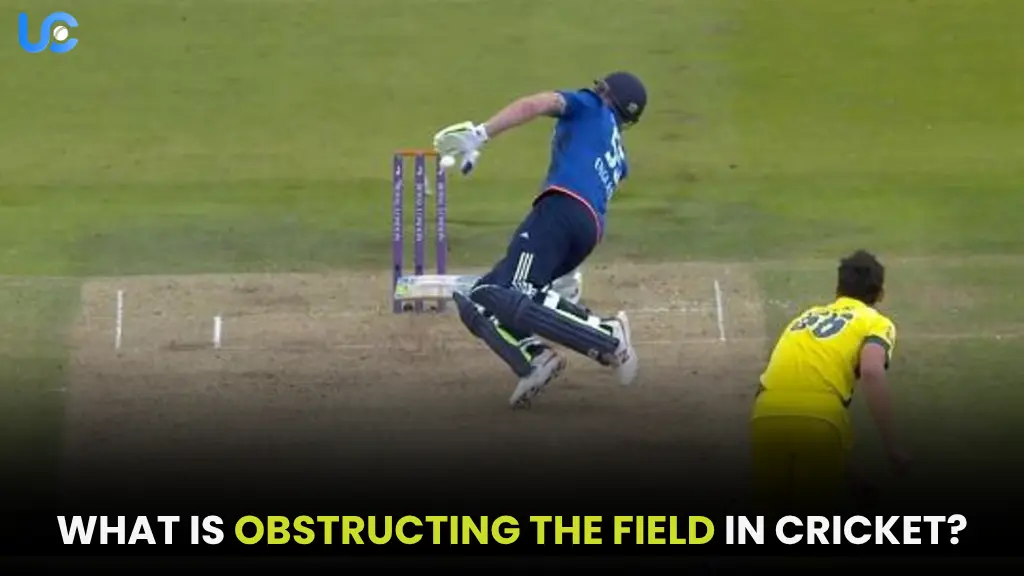
Let us say a bowler bowls the ball and a batter stops the ball with the bat. But then the ball comes towards the stumps and the batter stops the ball from hitting the stumps with his/her hands.
In this case, the batter has definitely tried to protect the wickets, so the umpires will deem him/her out for obstructing the field as soon as the fielding team appeals.
However, there are situations where the umpires might still see the intention behind the action and rule it out.
Consider a batter who moves to the pitch and swings the bat hitting it straight to the bowler. The bowler then swiftly throws the ball back at the stumps, but the batter then mistakenly stops it with his/her bat trying to avoid getting hurt.
The fielding team can appeal for the batter’s dismissal but the umpires will decide based on the player’s action. If the umpires conclude it was a case of mishap, the batter won’t be considered out.