
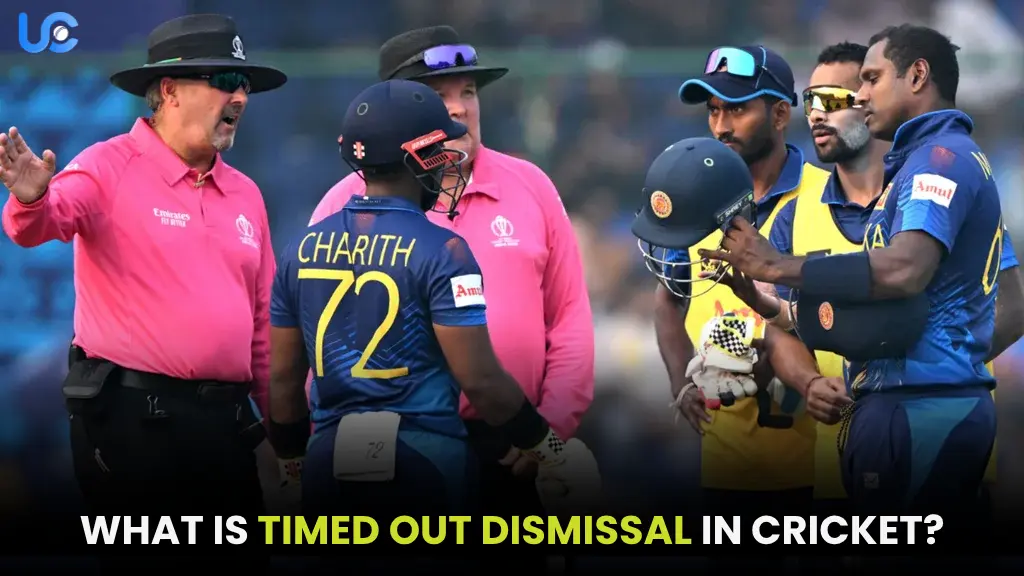
The 2023 ODI World Cup match between Sri Lanka and Bangladesh saw the fans experience a weird and rare dismissal that was at the same time a first in the history of cricket.
Angelo Mathews of Sri Lanka was ruled out ‘timed out’ and thus was the first-ever batter in international cricket to be ruled out in this way. But what is timed out? What are the rules surrounding it?
In this blog post, we will clarify the cricket player being ‘timed out’ dismissal.
Timed Out in Cricket
Timed out is one of the possible ways to send a batter to the dressing room legally. In very simple words, if a batter does not come to take the strike within a certain time after another batter is out, the batter is ruled out — timed out.
As per cricket laws laid down by the MCC, the next batter has to be ready to take the next delivery within 3 minutes after the fall of a wicket or a batter retires. If this is not done, the fielding captain may appeal for a timed out dismissal and the umpires may rule that the next batsman is out, timed out.
But as per ICC’s updated rules, the incoming batter has to be ready to face the next ball within 2 minutes in Tests and ODIs while it is 1 minute and 30 seconds in T20Is.
And it is important to note that in case of such a dismissal, the bowler will not get credit for the dismissal.
Actually, the whole idea of this dismissal is to make sure that players do not take unnecessary time and that the game stays in rhythm. Some batters might deliberately take longer to reach the ground, and this is a good way to punish such batters.