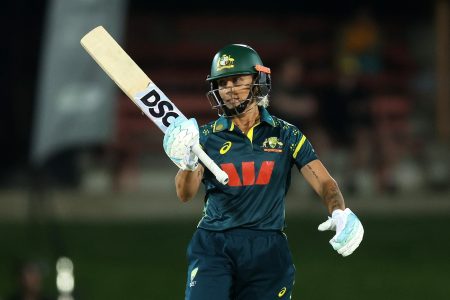

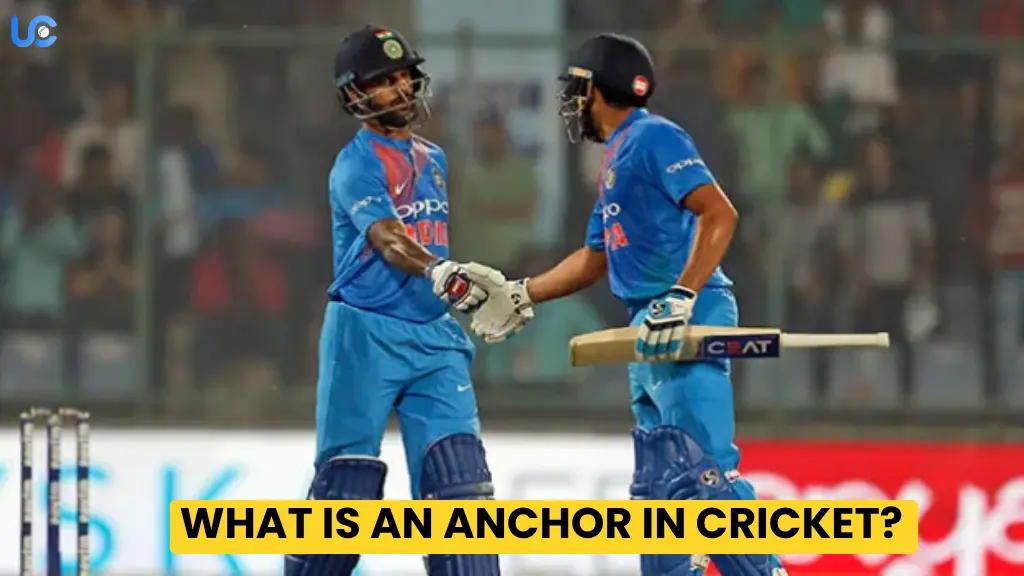
You have probably heard a cricket commentator say, “The batter is anchoring the innings” when the match was on.
One question that might have come to your mind is the meaning of anchoring in cricket.
Let’s clarify the term anchor in cricket.
Anchor in Cricket
An anchor is a corresponding batter role. Well, any batter can now be an anchor depending on the match atmosphere, but mostly it’s on the top-order batters who are given the responsibility to hold the position.
But still, what does anchoring really mean?
The anchor’s task is to make the team’s innings steady. Imagine, big ships and boats using metal anchors to prevent the vessel from going adrift in the water.
The anchors in cricket, too, work on the same principle, making sure that the team does not disintegrate. They hold one end while other batters play around with them.
Let’s say, a team is having a hard time scoring and the score is 20 runs with 4 wickets already lost. In such a scenario, one of the batters on the pitch must be the anchor of the innings.
Read Also :- Central Contracts For England Cricketers
This way, the batter will not only bring the team to a relatively good total but at the same time will do so through a slow but sure run rate. Besides, the other incoming batters can depend on the anchor to do their risky shots and keep the run rate increasing.
The Role of Anchors in Cricket
Let’s consider the previous example, the anchors’ value cannot be overemphasized. A savior could be an anchor when the batting side is in a difficult position.
The team can be rescued from trouble through their calm, composed style along with solid batting.
However, such an anchor’s function is impactful in long-duration matches, such as Test and ODI games. With significant resources available, anchors can influence the outcome of Tests and ODIs. However, there are no anchors in one-day international cricket, except in the case of 3-4 wickets falling quickly.
The Duties of Anchors in Cricket
An anchor does have a certain amount of responsibilities resting on their shoulders. First and foremost, one has to cling to the innings while scoring at a fast rate.
The anchor does not take many risks while creating a strong base for the later batsmen. Through their composed innings, an anchor stops further loss of wickets, thus bringing about the stability of the innings.
At the same time, they are building very nice relationships with the other batsmen while being on the pitch for a longer time.
Conclusion
The anchor’s role asks a batter for patience and to take risks that are well calculated while scoring. The ability to remain longer in the crease might lead them to a big score.