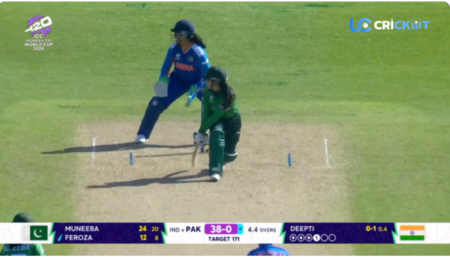

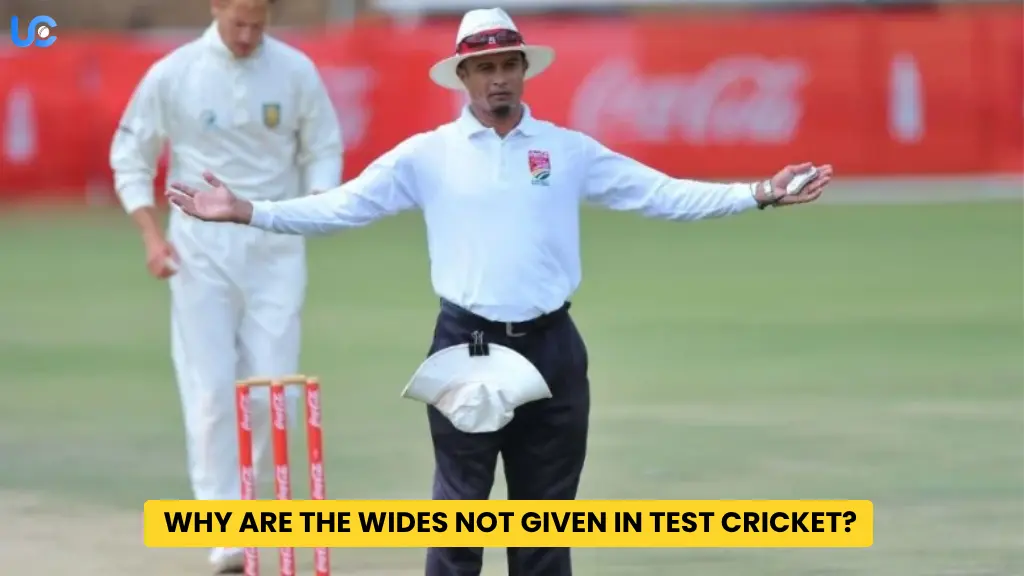
If you are a limited-overs cricket fan and have seen ODIs and T20s, then you surely noticed when umpires signalled balls bowled outside the reach of a batter as ‘wide’.
On the contrary, if the same happens in Test cricket, the umpires do not signal it as a wide ball. So what is the difference between wide rules in Test cricket and limited-overs cricket?
Let us now shed some light on the wide rules in Test cricket
Are there No Wide Balls in Test Cricket?
It is not that there are no wide balls given at all in the longer format. The umpires can also call a few deliveries wide if the criteria are met.
Still, certain balls are not given wide, which you see more often signalled wide in the limited-overs format. But what is the reason for the difference?
In limited-overs cricket, down the leg side or too outside off deliveries are given wides, but that is not the case with Test cricket.
The bowlers enjoy a little freedom in the wide rule in Test cricket. And if you look closely, there are no wide lines drawn in a Test match, unlike ODIs or T20s.
Read Also :- How Many Overseas Players Are Allowed To Play 11 In The IPL?
Even if a bowler bowls too outside off the stump or down the leg side, the umpires do not signal that as a wide. However, the delivery will be considered valid only if it passes inside the return crease on the pitch.
If the ball passes just outside the return crease, then it will be signalled as wide. Besides that, if the bowler delivers a bouncer that goes above the batter’s head, it will also be considered wide.
What then are the main limitations of wides in Test matches?
In one-day international and twenty-twenty matches, bowlers limit themselves to deliveries that are impossible for batters to hit, and this is regarded as a defensive strategy that will only result in fewer runs being scored. However, if bowlers keep throwing such balls, there won’t be any real competition between the batsman and bowler. Thus, bowlers are punished for wides, and batters are allowed an extra ball to hit.
On the other hand, in the case of Tests, bowling wide is of no benefit for the bowler or the team, as they cannot win by delivering wide balls. Besides, there is no limit on the number of balls bowled in Tests, so the bowlers can take their time to get the opponents out or otherwise the batting team will be there for a long time.
No bowler in Test cricket wants to be on the field for a long time because their primary objective is to take the 20 wickets of the opponent by employing attacking and not defensive strategies.
And it is extremely improbable that any bowler would use the wide tactic intentionally, thus the wide rules are not strict in Tests.