
Ball tampering is the illegal act of changing the condition, surface or shape of a cricket ball to help a team gain an unfair advantage.
In cricket, the condition of the ball plays an important role, especially for fast bowlers. A properly maintained ball can help bowlers generate swing, reverse swing and movement through the air.
Players are allowed to maintain the ball using approved methods, such as polishing it without artificial substances. However, deliberately damaging or altering the ball using unauthorized objects or materials is considered ball tampering.
Some examples include:
- Using sandpaper to roughen the surface of the ball.
- Scratching the ball with fingernails.
- Using sharp objects to damage its surface.
- Picking or lifting the threads of the seam.
- Applying unauthorized substances to change the ball’s condition.
The main purpose is to make the ball behave differently and give bowlers an advantage over batters.
Why Do Players Tamper With the Cricket Ball?
The main reason behind ball tampering is to help bowlers generate more movement through the air.
A cricket ball naturally becomes older and develops wear during a match. Bowlers can use its changing condition to generate conventional swing and reverse swing.
When players illegally alter the ball, they attempt to influence how it moves through the air.
For example, roughening one side of the ball can help create conditions favorable for reverse swing. Similarly, illegally applying certain substances may change the surface and affect its movement.
This can make it harder for batters to judge the direction of the ball.
How Does Swing Bowling Work?
Swing bowling is a technique in which a bowler makes the cricket ball move sideways through the air before it reaches the batter.
There are two main types of swing bowling.
1. Conventional Swing
Conventional swing usually happens when the ball is relatively new.
The bowler uses the condition of the two sides of the ball, along with wrist position, seam position and bowling speed, to make it move in the air.
For example, a right-arm fast bowler can make the ball swing towards or away from a right-handed batter.
2. Reverse Swing
Reverse swing generally becomes more effective with an older ball.
As the ball gets older, one side may become rougher while the other remains smoother. At higher speeds, this difference can help the ball move in the opposite direction to conventional swing.
Reverse swing is particularly dangerous because it can happen late and quickly, giving batters less time to react.
Important: Swing bowling itself is completely legal. The problem begins when players deliberately and illegally alter the ball to create an unfair advantage.
What Are the Legal Ways to Maintain a Cricket Ball?
Not every action that changes the appearance of a cricket ball is illegal.
Cricket’s laws allow players to maintain the ball through certain approved methods.
Generally, players are allowed to:
- Polish the ball without using an artificial substance.
- Dry a wet ball with a towel.
- Remove mud from the ball under the supervision of an umpire.
- Rub the ball against their clothing as part of normal polishing.
However, using artificial substances or objects to change the ball’s condition is not allowed.
Is Using Sweat on a Cricket Ball Legal?
Yes. Players can use sweat to polish the ball under the applicable playing conditions.
However, the use of saliva on the ball was prohibited under international cricket playing conditions during the COVID-19 pandemic and the restriction was retained.
Players therefore use approved methods, including sweat, to maintain the shine.
What Are the Illegal Methods of Ball Tampering?
Here are some common examples of actions that can be considered ball tampering.
| Method | Why It Is Illegal |
|---|---|
| Sandpaper | Used to roughen the ball’s surface |
| Fingernails | Can scratch or damage the ball |
| Bottle caps | Can create scratches on the surface |
| Boot spikes | Can deliberately roughen the ball |
| Unauthorized substances | Can artificially change the ball’s condition |
| Picking the seam | Can change the seam to influence movement |
The umpires are responsible for monitoring the ball’s condition throughout the match.
What Is the Punishment for Ball Tampering in Cricket?
Ball tampering is considered a serious offense under cricket’s rules.
Under Law 41.3 of the Laws of Cricket, if the umpires find that a team has unfairly changed the condition of the ball, the following actions can be taken:
- Five penalty runs: The opposing team receives five penalty runs.
- Ball replacement: The opposing captain can request a replacement ball.
- Bowling restrictions: A bowler found guilty of repeated ball tampering may be prevented from bowling again in that innings.
- Additional disciplinary action: Players can face fines, suspensions or other sanctions depending on the seriousness of the offense and applicable playing conditions.
Captains may also face disciplinary action if they are responsible for the conduct of their players.
Famous Ball Tampering Scandals in Cricket History
| Year | Player / Team | Opposition | Incident | Punishment / Outcome |
|---|---|---|---|---|
| 1990 | Chris Pringle (New Zealand) | Pakistan | Used a concealed bottle cap to roughen the cricket ball during a Test series. | Later admitted to the incident after retiring. |
| 1994 | Michael Atherton (England) | South Africa | Accused of using dirt from his pocket while handling the ball during a Test at Lord’s. | Fined £2,000 for failing to disclose the dirt to the match referee. |
| 2000 | Waqar Younis (Pakistan) | South Africa | Found guilty of ball tampering. | Suspended and fined 50% of his match fee. |
| 2001 | Sachin Tendulkar (India) | South Africa | Accused of interfering with the seam of the ball during a Test. | ICC later cleared him of ball-tampering charges. |
| 2004 | Rahul Dravid (India) | Zimbabwe | Applied a cough lozenge to the ball during an international match. | Fined 50% of his match fee. |
| 2006 | Pakistan Team | England | Controversy over the condition of the ball during the Oval Test. | Match was awarded to England after Pakistan refused to return to the field; the result was later disputed and ultimately restored as an England win. |
| 2010 | Shahid Afridi (Pakistan) | Australia | Caught on camera biting the cricket ball. | Suspended for two T20 internationals. |
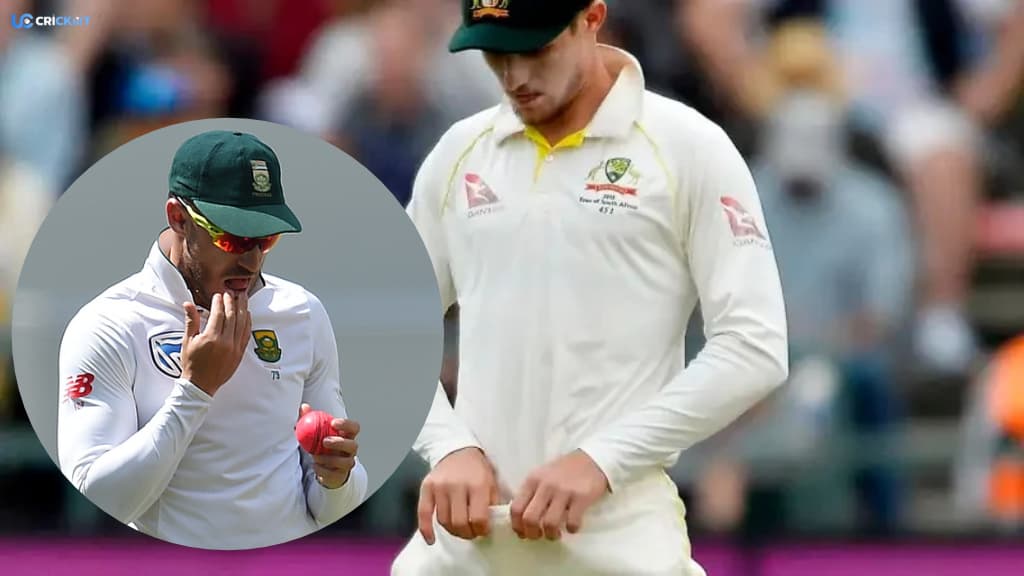
| 2013 | Faf du Plessis (South Africa) | Pakistan | Rubbed the ball against the zipper of his trousers during a Test in Dubai. | South Africa received five penalty runs; du Plessis was fined 50% of his match fee. |
| 2014 | Vernon Philander (South Africa) | Sri Lanka | Found guilty of scratching the ball with his fingers and thumb. | Fined 75% of his match fee. |
| 2016 | Faf du Plessis (South Africa) | Australia | Found guilty of applying saliva from a mint or sweet to the ball. | Fined his match fee. |
| 2018 | Steve Smith, David Warner and Cameron Bancroft (Australia) | South Africa | Bancroft used sandpaper to alter the ball during the Cape Town Test. | Smith and Warner received 12-month bans; Bancroft received a nine-month ban. |
| 2018 | Dinesh Chandimal (Sri Lanka) | West Indies | Accused of changing the condition of the ball during a Test match. | Received a one-Test suspension. |
| 2019 | Nicholas Pooran (West Indies) | Afghanistan | Found guilty of ball tampering during an ODI. | Suspended for four T20 internationals. |
Ball tampering has been involved in several major controversies in international cricket.
1. Australia Sandpapergate Scandal (2018)
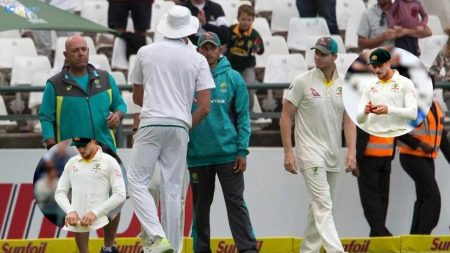
The 2018 Sandpapergate scandal is one of the most famous ball tampering incidents in cricket history.
During the third Test between Australia and South Africa at Newlands in Cape Town, television cameras caught Australian batter Cameron Bancroft using a yellow object on the cricket ball.
He later admitted that he had used sandpaper.
An investigation by Cricket Australia identified Steve Smith, David Warner and Cameron Bancroft as the players involved in the incident.
- Steve Smith received a 12 month ban.
- David Warner received a 12 month ban.
- Cameron Bancroft received a 9 month ban.
The incident caused a major crisis for Australian cricket and led to significant changes in team leadership.
2. Shahid Afridi Ball Tampering Incident (2010)
Pakistan captain Shahid Afridi was caught on camera biting the cricket ball during a T20 international against Australia in January 2010.
He later pleaded guilty to ball tampering and received a two match ban.
The unusual incident attracted worldwide attention.
3. Faf du Plessis Ball Tampering Incident (2013)
South African cricketer Faf du Plessis was found guilty of ball tampering during a Test match against Pakistan in Dubai in 2013.
Television footage showed him rubbing the ball against the zipper of his trousers.
South Africa received five penalty runs, and du Plessis was fined 50% of his match fee.
4. Rahul Dravid Ball Tampering Incident (2004)
Former Indian batter Rahul Dravid was fined 50% of his match fee after television footage showed him applying a cough lozenge to the ball during an international match against Zimbabwe in Australia.
The incident raised questions about the use of artificial substances to maintain the ball’s shine.
5. Waqar Younis Ball Tampering Incident (2000)
Former Pakistan fast bowler Waqar Younis became the first cricketer to receive a suspension for ball tampering.
He was suspended following an incident in July 2000 and was also fined 50% of his match fee.
What Is the Difference Between Ball Tampering and Ball Polishing?
Many cricket fans confuse ball polishing with ball tampering, but they are not the same thing.
| Ball Polishing | Ball Tampering |
|---|---|
| Legal when done using approved methods | Illegal alteration of the ball |
| Helps maintain the ball’s shine | Attempts to change the ball’s condition unfairly |
| Can be done without artificial substances | May involve unauthorized objects or substances |
| Commonly performed by fielders | Can result in penalties and suspensions |
For example, rubbing the ball with clothing to maintain its shine is allowed. Using sandpaper to roughen one side is illegal.
Can a Bowler Benefit From Ball Tampering?
Yes, changing the condition of a cricket ball illegally can give bowlers an unfair advantage.
A ball with an altered surface may behave differently in the air, potentially helping fast bowlers generate additional movement.
However, the actual movement depends on several factors, including the ball’s condition, bowling speed, seam position, weather and pitch conditions.
This is why ball tampering is treated as a serious offense. It can affect the balance between bat and ball and undermine fair competition.
Frequently Asked Questions About Ball Tampering
What does ball tampering mean in cricket?
Ball tampering means illegally changing the condition or surface of a cricket ball to gain an unfair advantage, usually by helping bowlers generate more swing.
Is ball polishing illegal in cricket?
No. Polishing the ball without artificial substances is allowed under the Laws of Cricket.
Is using sandpaper on a cricket ball illegal?
Yes. Using sandpaper to roughen or damage the ball is illegal and can result in disciplinary action.
How many penalty runs are awarded for ball tampering?
Under Law 41.3, the opposing team receives five penalty runs when the umpires determine that the ball has been unfairly altered.
Who was the first cricketer suspended for ball tampering?
Pakistan fast bowler Waqar Younis became the first player to receive a suspension for ball tampering in 2000.
Can a team change the ball after a ball tampering incident?
Yes. If the umpires find that the ball has been unfairly altered, the opposing captain can request a replacement ball under the relevant playing conditions.