
To a wider audience, cricket is regarded as an incredibly nice and unusual sport with its own complicatedness and layers.
First of all, the variety of cricket is a major fact for its uniqueness, in contrast to the majority of other popular team sports. The main cricket forms are the 5-day red-ball game Test Cricket, which has been played for over a century (matches in regional tournaments or bilateral tour games can be played as 3-day or 4-day games), and limited overs white-ball cricket. It is further divided for the highest level of play into 50-overs and 20-overs formats, with the game being over in a single day.
Moreover, the 50-over formats have a shorter version called T10, where each side plays 10 overs, and the Hundred, where an inning consists of 100 balls, are among the further variations in the white-ball formats.
This intricate picture of the different forms of cricket has led us to the point of discussion between the First-Class game and List-A cricket.
What is List A Cricket?
“List-A Cricket” is a term that is associated with 50-over game and, in some cases, it is a side game of 40-overs to 60-overs. Usually, the game finishes in 8 hours or less with a maximum of 100 overs to be bowled. This all includes the different versions of 50-over cricket being organized and conducted by ICC-recognized cricketing bodies around the world.
To illustrate, the major national fifty-over tournaments allowed the participation of the full-time ICC member nations (12 boards) like India, Australia, South Africa, England, New Zealand, West Indies, Pakistan, Sri Lanka, Afghanistan, Ireland, Zimbabwe, & Bangladesh who all possess Test status and who temporarily have ODI status (8 teams) are all included in List A and so the international one-day cricket (ODI) played between these teams during the World Cups or qualifying tournaments such as the ICC Cricket World Cup Challenge League is also considered as a “List A” game.
On the contrary, any match between 2 international sides with more than 11 players in a team (like World cup warm-up games) does not get List-A status.
What is First-Class cricket?
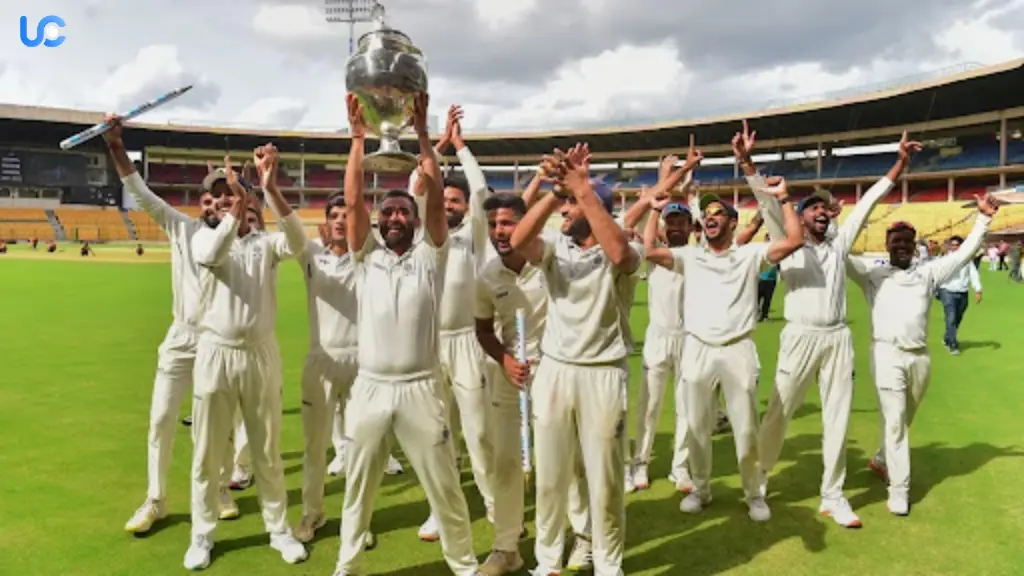
First-class cricket, as already stated, is a game that is played in the form of four and five-day matches. In addition, any match that lasts three days (like tour games before a bilateral series) is treated as a first-class game, provided it is played with 11-a-side teams. The Ranji Trophy, Irani Cup, Duleep Trophy (India), Sheffield Shield (Australia), County Championship (England), Quaid-e-Azam trophy (Pakistan), and Plunket Shield (New Zealand) are some of the prominent red-ball tournaments played in the countries with Test status that automatically get a first-class game.
The multi-day red-ball games managed by organizations outside the member states having Test status are not recognized as first-class games.
Like in the case of the ODIs, the statistics of the Test matches played among any two Test-playing countries will be counted as a First-class game.
What differentiates First-Class cricket from List-A cricket, then?
The fundamental distinction between First-Class cricket and List-A cricket is analogous to that between Test and ODI games. In brief comparison, First-class status is assigned to those matches that last for three or more days and are held in a Test-playing country. On the other hand, List-A status is not confined solely to the full member Test-playing nations but extends to at least four boards with temporary ODI status and to the matches played in the ICC Cricket World Cup Challenge League and higher.
Nevertheless, both kinds of cricket are played through the same channels with state, province, county, administrative division, and the ICC member nations’ regions or even between the countries.