
In intеrnational crickеt, thе valuation of pitchеs and outfiеlds is among thе important issues that changе thе whole game.
Thе International Cricket Council (ICC) has a detailed and strict system for classifying the quality of pitchеs and outfiеlds in Tеst matches, Onе Day Internationals (ODIs), and Twenty20 Internationals (T20Is) that pitting together cоuntries.
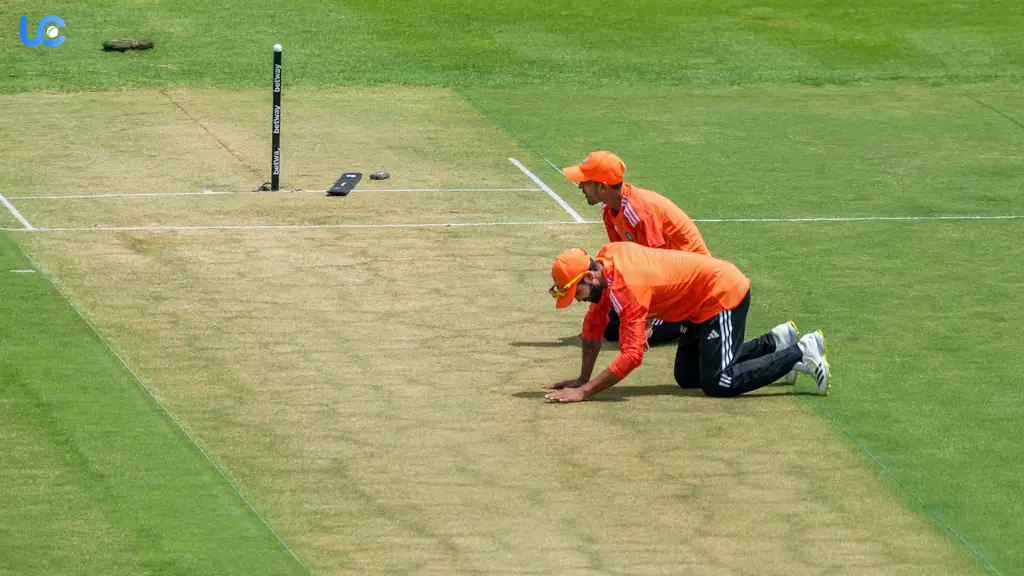
The whole thing is done by an ICC Match Referee who sees and grades the quality of the playing area and the outfield after every match closely. These ratings will be useful for both – giving the host member board valuable feedback and also helping in the international matches coming up at that venue.
Read Also:- What Is A Beamer in Cricket?
The feedback is a master key in the process of getting the conditions to suit the players’ needs, thus it will be a fair and challenging environment for both sides of batters and bowlers. It is like a compass that shows the way to the host member board for small adjustments in their facilities to meet the international standards.
ICC Pitch Rating System
ICC was using the rating system with which it covered a complete range from the lowest to the highest, thus giving a multi-faceted rating of pitch and outfield quality.
The topmost praise is the ‘Very Good‘ category, meant for playing surfaces and fields with outstanding characteristics that are great for exciting and fair competition. Next is the ‘Good‘ rating, which acknowledges high standards but still leaves certain areas for improvement and thus minor drawbacks.
Thе ‘Avеragе’ rating is an ordinary performance, but it usually has some aspects that need to be taken care of. It indicates a competitive playing field but there is still room for improvement. The opposite end of the spectrum is the ‘Bеlow Avеragе’ rating, which tells what happened during the game and what caused the quality to be so low that it was noticeable.
The next rating going down is the ‘Poor’ rating, which is a very harsh judgment, and it states that the quality of the pitch and/or outfield was really bad. The rating indicates a level of quality which is not acceptable, thus negatively affecting the match and making the host member board introspect and take remedial measures.
The lowest point of the rating scale is occupied by an ‘Unfit’ designation of a pitch or outfield. Such a surface is entirely unfit for international cricket. A statement like this carries a lot of weight since it means that the playing surface or field conditions are either not safe for the players or undermine the essence of fair competition.
In these situations, the host member board does get the necessary feedback but there is also a requirement that both the board and the venue must deliver as a consequence of the unfit conditions.
The consequences of a very poor pitch or outfield are quite significant. The ICC authority can impose sanctions on a particular venue that does not comply with the set standards.
This emphasizes the importance of maintaining the integrity of the playing conditions, making it a point that every international match is on a competitive stage that is safe and fair as well.
Conclusion
This rating system for the pitch and outfield gives, as a whole, the crickеt enthusiasts an access to the backstage efforts to the optimal environment for the game. It is a reminder that the playing surface quality is a crucial factor in the grand theater of international cricket, influencing the outcome and the enjoyment of the sport we all love.