
It is a common realization that cricket is, without a doubt, one of the most-viewed and most-followed sports in the world. Not only is the gentleman’s game well-known in certain areas but also gaining popularity worldwide, which is an indication that the sport is a `huge` crowd-puller and offering more countries that are just starting up a chance for exposure.
Even though the game won’t present any difficulties in understanding, there are a lot of different technical terms that are right under the surface that will often make it tough for the newcomers to the sport especially when it comes to the area of fielding.
For this reason, we will talk about fielding positions over a period of time in this manner. The position we will start the discussion with today is the slips, which is one of the most common and basic positions of all.
Why is it Called a Slip?
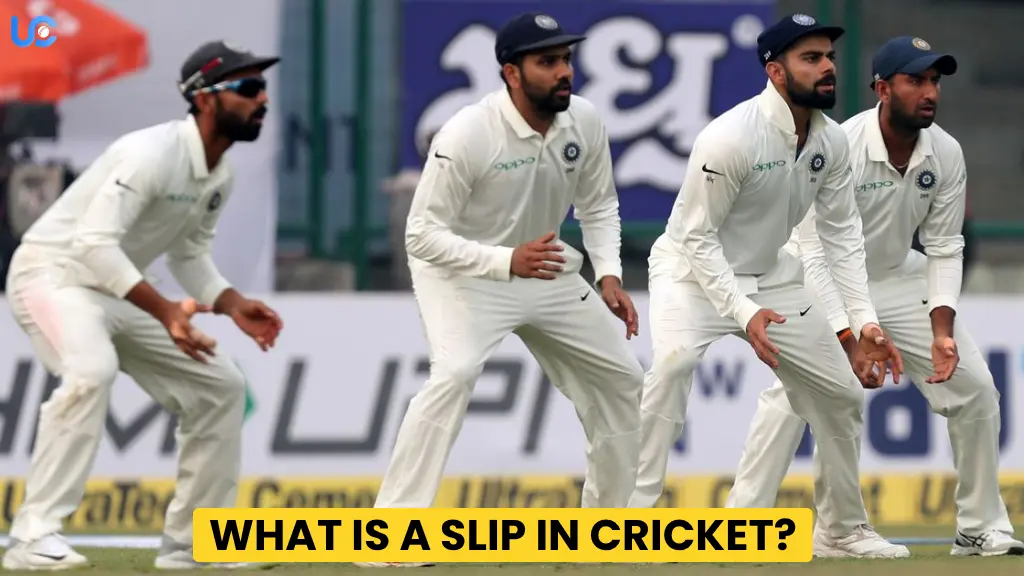
A slip is a fielder who is placed beside the keeper at a specific angle. The word gained popularity after several captains realised that having a wicketkeeper behind the stumps was not a foolproof strategy, as he could not cover the entire length of the pitch by himself.
Also, it was discovered that the keepers were responsible for fumbling the ball; therefore, the captains decided it would be preferable to deploy a couple of fielders there to avoid any ‘slip’ up by the keeper. As a result, the word slip was coined.
Read Also :- When and where to watch Pakistan vs South Africa ODI series?
Types of Slips in Cricket
Slips: These fielders are positioned on the left or right side of the wicketkeeper depending on the batsman’s hand. The number of slips can be anywhere from one to five.
They will be in a diagonal line but staggered, so that they do not dive on each other and also the bowler’s pace will determine their positions. Their presence is one way to reduce runs but the main intention is to catch the balls with edges.
Gully and Leg Gully: Gully looks like a slip but the fielder is deeper and squarer than the first slip. The job of the gully is to stop the back-foot shots from going to the boundary on the off side and to take the balls that the slips would not see. The case of the leg gully is the same but it is the opposite side.
Leg Slip: This fielder, unlike the other slip catchers, stands on the other side of the wicketkeeper. They are there to take any nicks or draw shots that the batter unintentionally plays down past their leg side rather than to the off side.
This is a valuable position in the field that often surprises some batters. However, it is often limited since only two fielders can be positioned beyond the square (horizontally from the batter’s crease) on the leg side.
Importance of Slip Catching
A slip fielder is usually stationed behind the batsman on the side of the field opposite to the batsman. Leg slips are also quite common in modern-day cricket, especially when spin bowlers operate.
Usually, slip fielders are placed in such a way that they can easily collect an edged or glanced ball that is out of the wicketkeeper’s reach. Slip fielding is a specialized skill, and not every robust outfielder acquires it.
A slip fielder is required to give utmost attention to each and every delivery that a game has to offer. Even after a full day standing in the slips, they would probably have only 3-4 deliveries coming their way; this could be quite daunting during Test and First-Class matches as the fielders probably would be there all day in the slips, if not most of the time.
The day is made up of about 90 overs, or 540 deliveries, with the slip fielders getting their share of about 3-4 deliveries. Consequently, lack of focus is the main problem because of the very low number of balls coming their way it is very easy for them to become distracted.
“There’s no catch which is outright easy in the slips,” remarked Rahul Dravid, the holder of the record for the highest number of Test catches and possibly the best Indian slip fielder ever. It is true, the majority of the time, whether it is a fast bowler or a spinner the player has no time to react in the slips.
All the teams need to have shooters who will step up to the challenge and react that fast to slips. The role of the slip fielders is magnified in test matches as the majority of the new ball wickets fall into the slips. Catching in the subcontinent goes on at Slip or Leg Slip quite a bit when the spinners work.
Mark Waugh, another great slip fielder, said once, “Don’t go for the catch; rather let the ball catch you.”
It is a very soft touch needed which will help to the greatest extent the handling of the ball on impact and also to a very high extent the making of the ball dropped unlikable. This technique of catching has made Waugh turn the most daunting catches from any bowler, fast or slow, at slip into the most simple ones.
Slip Fielding Techniques
Fast bowlers provide an opportunity for a slip fielding with two techniques the first being watching the ball and the second contacting its edge. Both methods require a lot of concentration and patience.
However, when it comes to spinner’s slip, the fielding is not only about the bowler but also the batsman; that is to say, the ability to read the bowler’s hand in terms of the direction the ball will turn, and thus, anticipate where it will go after taking an edge off the bat, becomes crucial.