

Understanding Sandpaper in Cricket
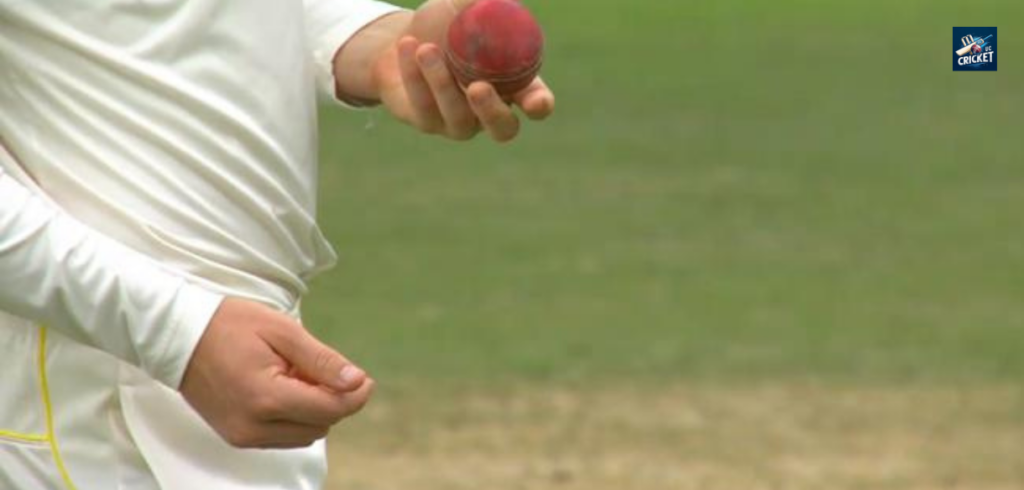
In cricket, players aim to alter the condition of the ball to gain an advantage, usually to help bowlers achieve more swing. While shining one side of the ball using sweat or saliva is allowed, using external objects to tamper with the ball is illegal. Sandpaper, a rough abrasive material, has become infamous in the cricketing world due to its involvement in some of the most controversial ball-tampering incidents.
Read Also:- How to Calculate Follow-On in Test Cricket
The 2018 Sandpaper Scandal: A Dark Chapter in Australian Cricket
The most infamous sandpaper incident occurred in March 2018, during a Test match between Australia and South Africa in Cape Town. Australian cricketer Cameron Bancroft was caught on camera trying to rub the ball with a small yellow object, which turned out to be sandpaper. During the press conference, then-captain Steve Smith admitted that the team’s leadership group, including David Warner, had discussed tampering to achieve reverse swing.
Consequences of the 2018 Scandal:
| Player | Punishment | Remarks |
|---|---|---|
| Steve Smith | 1-year ban, stripped of captaincy | Returned to international cricket in 2019 |
| David Warner | 1-year ban, lifetime captaincy ban | Remains barred from holding leadership roles |
| Cameron Bancroft | 9-month ban | Struggled to regain a stable place in the team |
Cricket Australia faced severe backlash from fans and the media, leading to significant changes in team leadership. Tim Paine was appointed as the new Test captain with the goal of rebuilding the team’s integrity.
You Can Check Also:- Champions Trophy 2025 Teams List
Other Famous Ball Tampering Incidents in Cricket History
Ball tampering has been a recurring issue in cricket. Here are some notable past incidents:
| Year | Player | Country | Incident |
|---|---|---|---|
| 1994 | Michael Atherton | England | Used dirt from his pocket while handling the ball |
| 2001 | Sachin Tendulkar | India | Disciplined over an alleged attempt to alter the ball’s condition |
| 2004 | Rahul Dravid | India | Rubbed a cough lozenge on the ball |
| 2010 | Shahid Afridi | Pakistan | Caught biting the ball during an ODI against Australia |
| 2016 | Faf du Plessis | South Africa | Penalised over applying saliva from a mint or sweet to the ball |
| 2018 | Cameron Bancroft | Australia | Used sandpaper to attempt to roughen the ball |
ICC Rules on Ball-Tampering
According to the International Cricket Council (ICC), any attempt to alter the condition of the ball using an external object is considered illegal. Players found guilty of ball-tampering face fines, suspensions, and level-2 or level-3 charges, depending on the severity of the offense.
Recent Changes: Post the 2018 scandal, ICC and various cricket boards have tightened their regulations on ball-tampering. Enhanced camera surveillance and stricter penalties have been implemented to curb such practices.
The Ongoing Debate on Sandpaper in Cricket
While the use of sandpaper in cricket has led to significant controversies, it also highlights the intense pressure players face at the highest level. The 2018 Cape Town incident remains one of the darkest moments in cricket’s history, but recent events like the Kohli-Bumrah episode show that the debate is far from over.
Moving forward, cricket boards and players must work together to uphold the spirit of the game and ensure fair play.
Why Is Sandpaper Still Famous in Cricket?
The 2018 Cape Town scandal became much bigger than an ordinary disciplinary incident because it involved senior players, team leadership and a deliberate plan to alter the ball.
It also created long-term consequences for the Australian team and its public image.
Virat Kohli’s gesture during the 2025 Sydney Test showed that the incident remains part of cricket’s modern history. Even years after the original scandal, the word sandpaper continues to remind fans of one of the sport’s most controversial moments.
ICC Rules on Ball-Tampering
The ICC’s playing conditions prohibit players from deliberately changing the condition of the match ball through unauthorised methods.
Under the ball-condition provisions, fielders are permitted to polish the ball on their clothing without using an artificial substance. They may also remove mud under an umpire’s supervision or dry a wet ball using an approved cloth.
However, players cannot use external objects or substances to change the ball’s condition.
What Is Allowed and What Is Not Allowed?
| Action | Allowed or Not Allowed |
|---|---|
| Polishing the ball using sweat on clothing | Allowed |
| Using saliva on the ball | Not allowed |
| Scratching the ball with fingernails | Not allowed |
| Using sandpaper on the ball | Not allowed |
| Using a bottle cap to scratch the ball | Not allowed |
| Applying an artificial substance | Not allowed |
| Removing mud under umpire supervision | Allowed |
| Drying a wet ball with an umpire-approved cloth | Allowed |
FAQs:
Q1: What is sandpaper used for in cricket?
A: Sandpaper is illegally used by players to roughen one side of the ball, helping bowlers achieve reverse swing.
Q2: What happened in the 2018 sandpaper scandal?
A: Australian players Steve Smith, David Warner, and Cameron Bancroft were caught tampering with the ball using sandpaper during a Test against South Africa. They faced bans and severe criticism.
Q3: How did Virat Kohli reference the sandpaper scandal recently?
A: During the 2024-25 Border-Gavaskar Trophy, Kohli made a sandpaper gesture after Steve Smith’s dismissal, reigniting memories of the 2018 scandal.