
Rishabh Pant, the Indian cricket sensation, is known for his fearless batting and his presence on the field. Now he’s facing a new challenge: recovering from a foot injury he got during the recent Manchester Test against England. What’s grabbing attention is not just his determination but the moon boot he’s wearing.
On July 23, 2025, during the fourth Test at Old Trafford, Manchester, Pant was playing well, scoring 37 off 48 balls, when he got hurt. Trying a reverse sweep against Chris Woakes, he was hit on his right foot. The hit caused immediate swelling and bleeding. Medical staff helped him off the field in a medical cart and he was clearly in pain.
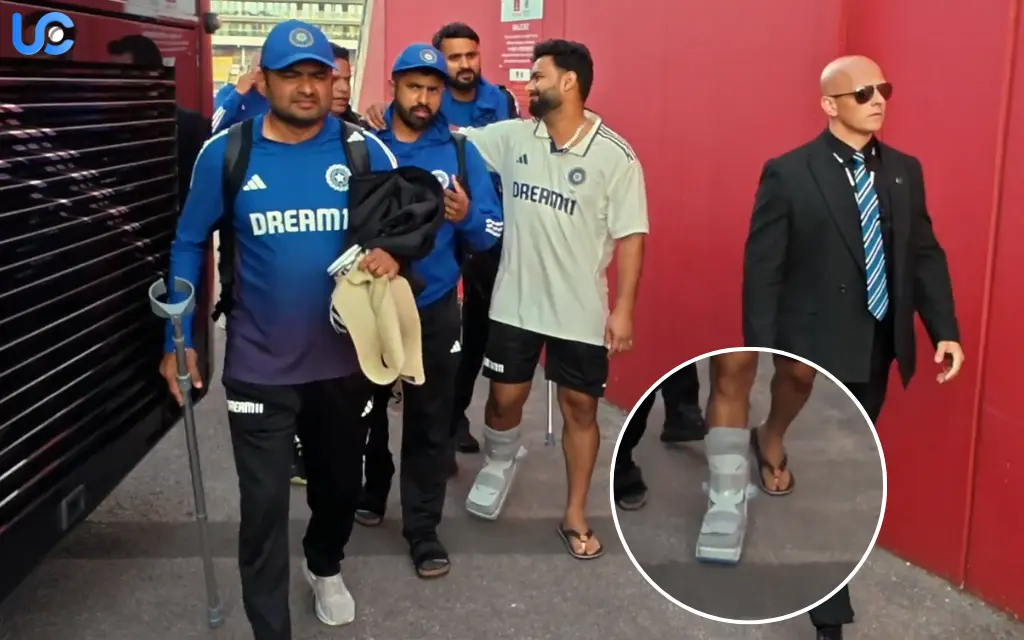
After that pictures of Pant wearing a big, futuristic boot went viral. This wasn’t just any shoe; it was a moon boot, a medical device used to help heal foot or ankle fractures.
What is a Moon Boot?
A moon boot, also called a walking boot or orthopaedic boot, is given to patients recovering from fractures, ligament tears or bad bruises in the foot and ankle. It’s called a moon boot because it looks like the boots astronauts wear.
This special boot has three main jobs:
- It keeps the injured area still to prevent more damage.
- It lowers pressure on the foot which helps bones heal faster.
- It lets the person walk without needing crutches.
Moon boots are made of hard plastic shell, thick padding and Velcro straps, making them strong but surprisingly light. Pant, who has been diagnosed with a metatarsal fracture, has been told by the BCCI medical team to wear one for at least six weeks.
How Much Does a Moon Boot Cost?
In India, a standard moon boot costs between Rs 3,000 to Rs 8,000. But high-end brands used in sports recovery like Ossur or DJO Global can cost Rs 10,000 or more. As a centrally contracted player, Pant probably got a top quality boot made for his specific needs.
Moon Boot vs Cricket Shoe: What’s the Difference?
Cricket shoes are light, flexible and have spikes for grip on the field. They’re made for quick movements like running, wicket-keeping or bowling.Moon boots are stiff and heavy. They’re not for performance but for protection and healing. They don’t have spikes and are designed to limit movement.
Pant’s Recovery Timeline
As per BCCI update on July 24, Pant needs 6 weeks of rest and physiotherapy. He will wear the moon boot during this time. If he recovers well, he could start light training by September and possibly return to competitive cricket by October when India is scheduled to host New Zealand for a Test series.
For Pant, the moon boot is not just a tool for recovery—it’s a step towards another comeback.