

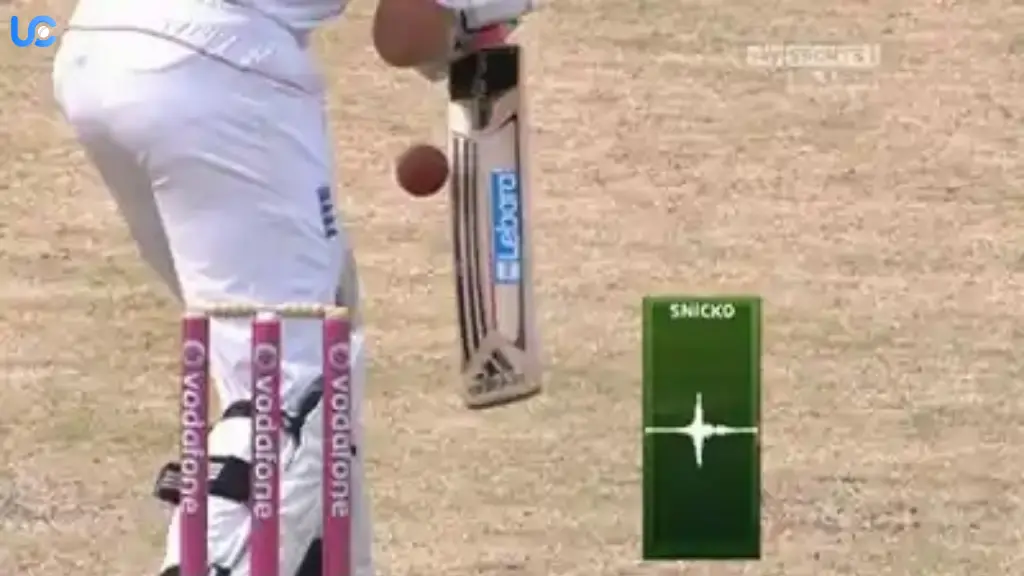
Technological advancements have become indispensable in the field of cricket, which is our favorite and most cherished sport nowadays. Cricket has been one of the most advanced sports that integrated the newest technologies to make everything easier for players, coaches, and umpires alike.
So far, we have witnessed DRS, Hawk-Eye, LED stumps, and a few more. But there is one technological innovation that hardly ever seems to get mention.
Which one? The Snickometer, of course. We are going to discuss the Snickometer’s role in cricket.
What is a Snickometer?
The Snickometer is an essential component of the Decision Review System (DRS) and the third umpire can utilize it when the on-field umpires or players take a DRS. The technology can identify if the ball has hit the bat, any equipment, or the player’s body.
Read Also:- What is A Golden Duck in Cricket?
Who created the Snickometer?
The Snickometer was invented by a British scientist named Allan Plaskett at some point during the 1990s. By the year 1999, Channel 4 in the UK had begun to use the technology during the international matches, however, it was only for broadcast use.
How Does Snickometer Work?
Snickometer technology is based on an arrangement where a sensitive microphone is put in the vicinity of the stumps. Subsequently, the stump mic is connected to an oscilloscope.
The stump mic is capable of picking up the sound frequencies that are generated when the ball strikes the bat, pad, gloves or the body of the player.
These sound frequencies are directed to an oscilloscope. The oscilloscope then kicks in and changes electric signals into a visual graph.
Graphical representation must have been part of your viewing experience during matches that showed a rise as soon as the ball struck something.
The rise in the graph is now going to be the third umpire’s guide in deciding whether the ball edged past the bat or not. If the batter nicked the ball and the fielder caught it, he will be out, but if the fielder didn’t then he will not be out.
In the same manner, the Snickometer can be employed by umpires for LBW review to ascertain if the ball hit the bat first before contacting the pads.
If there is a spike when the ball is close to the bat, then the umpire will not go any further down the road for an LBW call. But if there’s a flat line on the graph as the ball travels to hit the pads, then the umpire will carry on with the LBW review.
Conclusion
There is no denying that technology has made the umpire’s task more manageable. It has also virtually wiped out the risk of an umpire error in decision-making. Nevertheless, the technology has its downside, yet it will get better with time.