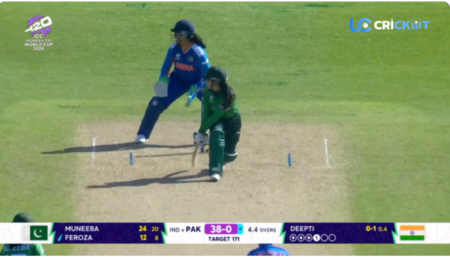

Cricket is a sport that is gaining popularity around the globe, and one of the quickest ways to understand this sport is by looking at the different aspects of cricket and their respective equipment. The sight screens are considered as one of the main pieces of equipment used on a cricket pitch and therefore their setup is very crucial to the game.
What is a sight screen in cricket?
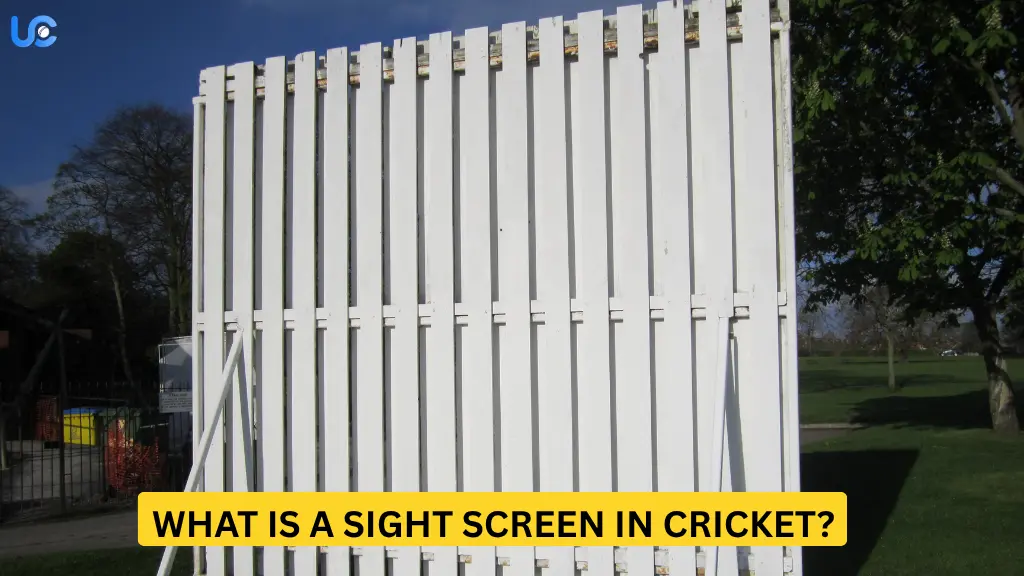
A sight screen is a huge screen in cricket that is placed precisely behind both wickets and past the boundary line of the field. The sight screens help with eliminating distractions and at the same time allowing the batter to see the ball more clearly. A sight screen is normally made from wood, cloth, LED screens or similar materials.
What is the purpose of a sight screen in cricket?
The batter is meant to have the ball isolated against the background from the moment the bowler starts the delivery until he/she has hit it or it has missed going by him/her.
In other words, think of yourself as a batter in the middle of the pitch. Then, imagine a huge, fierce bowler running at you full speed and throwing a heavy cricket ball at you at a speed of over 90 mph. You would surely want to be able to see the ball so you could either hit it or, if necessary, jump out of its way before it hits you.
A well-placed sight screen can make the difference between being able to see the ball and not being able to!
Read Also :- When is the victory parade of India for the World Cup win?
Where is the sight screen placed?
Each match has got two sight screens. One for each end of the wicket so that the batters can clear the ball from either side. In amateur roller cricket, however, the screens are placed at ground level although they are still high enough that from the batter’s viewpoint the bowler’s arm does not come over the screens.
In professional matches, sight screens are characterized by their larger dimensions and higher positions above the audience. Instead of storing big sight screens in some distant place, builders of stadiums decided to do it by making sight screens a part of the stadium structure which is also a very good way of people moving beneath the sight screen level waiting for the next delivery.
In case the boundary-embedded area is small, the sight screen can either be extended to the boundary or placed a few yards inside the playing area. Historically, players and spectators alike received the same treatment with respect to the ball whether it went over or under the screen; in this case, it was as if the ball had flown over the boundary. But if it touched down before the screen, no six would be awarded, of course.
Nonetheless, the present rules make the appointment of the boundary a must-do by the umpires before the match that will allow the sight screen to shift without encroaching on the pitch. This route must always be adopted even if it entails getting a boundary that is not straight.
The shades of sight screens
In the world’s most popular sport, cricket, the color scales for sight screens reveal that white and black screens are the prime choice.
School and small club level cricket, the amateur type of cricket, still often use white cricket sight screens. Because a red ball is utilized in these games, it is quite sensible to have white sight screens on the cricket ground to provide maximum contrast with the color of the ball.
If you observe, T20 games, when a white ball is used, are likely to have black sight screens also more often. The black background makes it easier for batters to see the white ball.
What is the area of a sight screen?
No concrete size limit is set for a sight screen. Still, the majority of those used in non-professional matches are approximately 4.5m by 4.25m in size.
What are the various components of a Sight screen ?
Simple sheets fixed by strings on the ground make up some of the sight screens. These screens are usually the cheapest ones and can be used in less formal and smaller places. Others are made of wood which, even though it is heavy, guarantees that the sight screen will last long (with a bit of fresh paint now and then) and will even be able to take some hits in case any batsman hits a perfectly timed straight drive for six.
Some are made of metal while the others are made of lighter materials like UPVC and polythene. In some cases, professional stadiums have LED screens that are positioned as advertisement boards all over the place. They are usually made of twelve slats and have openings in between to facilitate air circulation.
Are moving sight screens a common phenomenon?
Sight screens, as we have previously indicated, are available in a wide range of types and sizes. They vary in size, color, and shape but have different degrees of mobility as well. The use of lighter materials in making sight screens is a reason for making it easier to move your screen whenever it is needed.
The ones that are fixed to the ground are certainly much harder to move. On the contrary, however, many sight screens are fitted with wheels so they can be easily moved according to where the bowler’s arm releases the ball. After all, if a left-handed bowler throws the ball from around the wicket to a right-handed batter, the line of the ball will be very different than if the same bowler threw the ball from over the wicket.
A number of things like this are the reason why many sight screens are designed to be easily shifted between overs and sometimes even between deliveries, thus giving bowlers an advantage just by altering the direction from which they bowl.
Conclusion
Cricket is a very mentally demanding sport that requires the player to have full concentration, and even the smallest movement in the field could disrupt the batter. Therefore, using a sight screen enables the batter to fully focus on the ball and hence make more accurate calls. The cricket sight screen acts as a barrier against any disturbances coming from the audience located behind the bowler by offering a clear difference between the colour of the ball and that of the screen.