

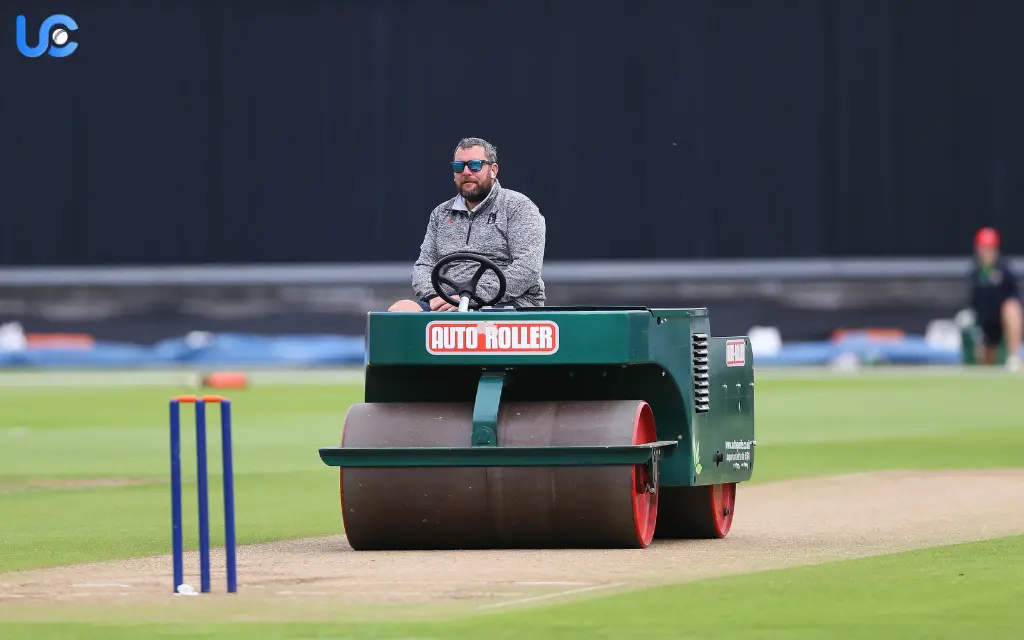
The India-England series is at a crunch time. Day 5 of the 5th Test and India need 35 runs with 4 wickets left. Cricket fans are in for a treat as either team can win.
Indian fans are hopeful because of the overcast conditions on Day 5 with dark clouds over the Kia Oval. These conditions will favor India. England will try to counter this with heavy rollers.
Fans and experts have been discussing this over the last day and rollers will decide the outcome of the match. Cricket analyst Harsha Bhogle tweeted, I’m glad others are wondering why play didn’t continue to see a possible finish. Now the heavy roller comes into play and that might change the game.”
This article explains the role of rollers in Test matches, the types available and why England is using the roller on Day 5.
Why Use Rollers in Test Cricket?
A Test match is played over 5 days and the pitch deteriorates showing cracks and unevenness. Curators use a roller to bind and even the surface. Rollers prepare and maintain a cricket pitch in matches that last multiple days. Rolling does the following:
- Compacts the soil: Rollers maintain consistent ball bounce and speed.
- Level irregularities: They eliminate cracks and unevenness, making the surface even.
- Manages moisture: Affects the pitch’s dryness or dampness.
The type and time of roller used decides if the pitch helps the batsmen or bowlers.
Types of Rollers
- Light Roller: Weighs between 500-1,000 kg. Sets the surface and is used early on or when flattening is not wanted. Benefits bowlers.
- Medium Roller: Weighs about 1,000-1,500kg. Less common but sometimes used as an intermediate.
- Heavy Roller: Weighs 1,500kg or more. Compacts the surface, smooths cracks, flattens roughness and makes batting easier though briefly.
England wants to use the heavy roller to negate any surface advantage for India.
Read Also:- Match Suspended Meaning in Cricket: Reasons and Latest Updates
Why England is using the Roller on Day 5
As per ICC rules, the batting team’s captain decides if the pitch is rolled each day. They also decide the type of roller before play starts (except on the first day when only a light roller is allowed).
A heavy roller can neutralize the cracks for a short while and make scoring less risky and allow the chasing team to start on a more batting friendly surface. This will only last for a few overs but those first 10-15 overs on the last day can be crucial.