
A fresh cricket ball is a prerequisite for every cricket match. I mean, it’s obvious!
The cricket ball is one of the most important factors in the game. Alongside, there are certain regulations regarding the count of balls that can be utilized in a cricket match. In this article, we will examine closely the new ball rules in cricket.
Prior to our deep dive, understand the distinctions between red, white, and pink cricket balls.
New Ball Rules in Cricket
At the same time, remember that different formats have different rules. Moreover, weather conditions might also determine the extent of new cricket balls being provided.
But the question arises why there is a necessity for new cricket balls?
Need for New Cricket Balls
Cricket balls are subjected to heavy wear and tear, as the batsmen send them flying over the pitch and across the outfield. The leather covering of the ball will get scuffed, soften, and may even lose its shape. This all makes it impossible to have the balls for a lengthy period of time.
Read Also:- Difference Between List A and First-Class Cricket
Thus, the requirement of a new cricket ball comes into play. However, it is worth mentioning that no player can just take a new ball according to his or her discretion. Rather, there are some rules to be followed. Let’s go through them.
New Ball Rules in Test Cricket
Let’s start by discussing the longest form of the game. Players usually endure a Test match for five days.
In a Test match day, 90 overs are bowled usually. So on five days 450 overs can be bowled max, which is the same as saying that.
Just like all other Test matches or First-Class games, the game starts with a new ball. And there is a rule that the same ball is to be used for 80 overs. As the ball loses its quality, the bowling team has the choice to ask for a fresh ball after 80 overs of an innings.
From then on it is up to the captain of the fielding side to choose whether he wants to have the ball replaced right away or after some time. Also, in case the batting side persists for over 160, yet another new ball will be provided.
New Ball Rules in ODI Cricket
Next is the turn of ODIs where an inning kicks off with 2 balls of fresh cricket. Both balls are then played with from either end of the wicket alternatively by bowlers.
Before the year 2011, only one ball was used throughout the 50 overs and no change in rules was there. Getting rid of the old white ball rule was a purely strategic decision to prevent heavy wear and tear for the ball as well as to maintain its color and polish.
With the introduction of the new regulation, a 2-innings ODI match is played with a total of 4 balls. This implies that each ball is utilized for 25 overs in two innings.
New ball Rules in T20 Cricket
At last, we should observe the most thrilling and shortest format of the game—T20 cricket.
The format is so short that each inning lasts only 20 overs and one ball is used by each team per inning. Thus, 2 balls are used in a T20 match. Due to the shorter duration of the game the wear and tear of the ball is less compared to the other formats.
Moreover, there is no rule for an extra new ball unless an extraordinary case occurs.
New Balls for Exceptional Conditions
Under certain circumstances, the umpires will make the final decision on whether to provide a new cricket ball or not.
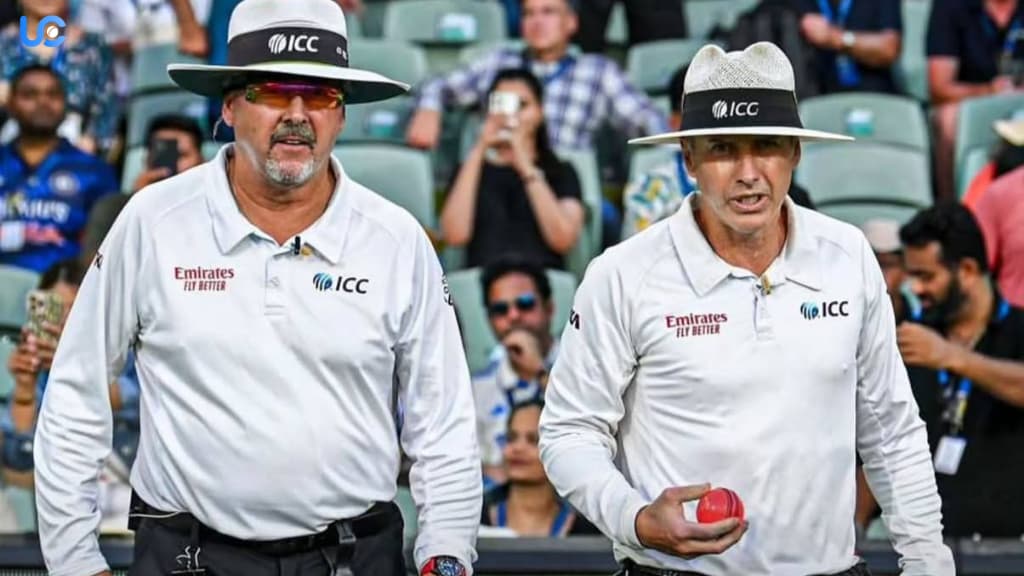
The bowling side can ask the on-field umpires to change the ball if they think it has lost its shape. The umpires will take a look at the ball and see if it can go through a metal hoop. If it can’t, the umpires will then choose an old ball (not a new one) that is like the first one.
In case of changing the ball due to the condition when it is lost is another scenario.
This can happen more often in limited-overs cricket, particularly in T20 matches. The batsman may strike the ball out of the ground, which will lead to the umpires getting another ball. The umpires then replace the ball with another one that is similar in condition.
Conclusion
In case the producers of cricket balls come up with exceptional products, these balls will still have a limited life. In addition, the quality of the balls will decrease to a point where they are no longer suitable for playing. Thus, it is necessary to replace the old balls with new ones whenever it is required. This makes the game fair to both the bowlers and batters.