
Cricket is a game which has undergone a series of changes with the introduction of new technology to improve skills and techniques, and one of the main factors in its evolution is the addition of the traditional terms for the entire field and their corresponding positions.
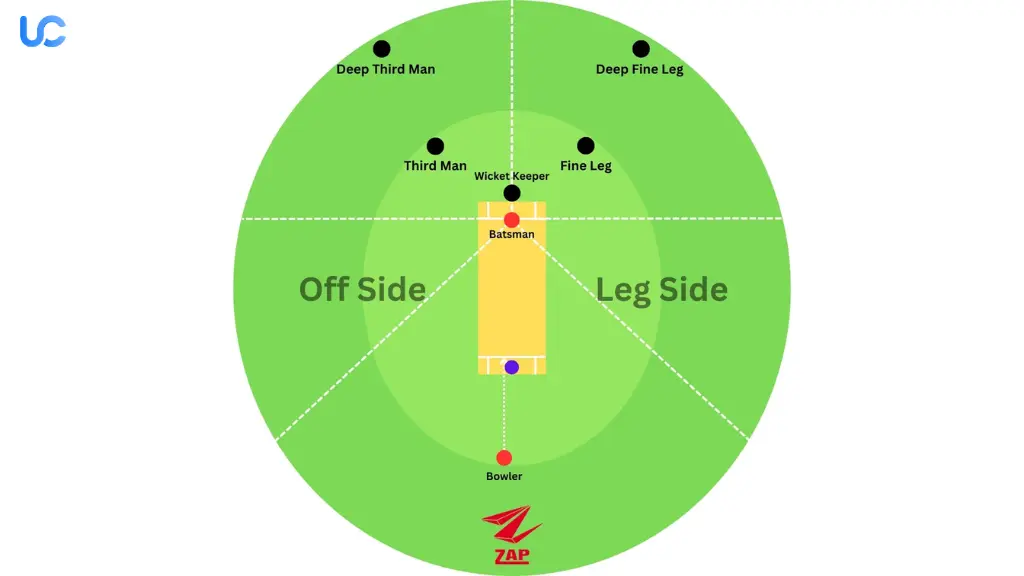
The position of the third man, which is located one square away from the wicket on the batsman’s offside area, is really one of the most striking and interesting positions on the field in terms of fielding. The main task for the third man is to cut off runs that might be produced through the ball going behind the slips or gully.
A fielder must prevent the ball from reaching the boundary if it goes past the others. The ball moves very quickly around the slips, and the third man is a very crucial position in limited-overs because many edges either fly towards or over the top of the slips.
Though no one has an exact idea of how the term actually came about, it is believed that when the overarm bowler came to the scene, there was a necessity of a “third man” or “third fielder” to back up the slips and gully. Hence, the term “third man” was created.
Read Also:- Top 5 Batsmen with the Most Runs at No. 3 in IPL History
Short Third Man:
The term “gully” is derived from the very small gap between the point fielder and the slips. This area was formerly known as the short third man. Third man (or third man up) used to be the position between slip and point, but over the years, it has gradually moved deeper into the field.
Why Have a Third Man?
The third man is positioned behind the square on the off side. Most of the time, the batsman will be going straight, but your main job will be to stop the ball that is coming to you from straight bat shots and return it to the wicketkeeper.
If the fast bowler is bowling, you are going to be at the very rope, just trying to keep the boundary, and getting the ball in while allowing 1 or 2 runs. You might be surprised by a hook or a flying edge.
The fact is, fast bowlers are already placed there to field and return the odd ball with a disinterested attitude. However, the modern era has set higher standards with perfect throws, diving catches, and sliding stops becoming the norm.
It is the case with spinners, slower medium pacers, and faster bowlers trying to get past the field limits that you get pushed to the short third man position in the ring.
You will now be trying to prevent the single from taking place. Plus, you will be more likely to catch a ball, such as a top-edged sweep.
How to Field at the Third Man?
At the boundary, you have so much time because either the ball is not coming to you or it is coming slowly, so you do not have to guess or concentrate too hard. This gives a chance for bowlers to think and plan between overs.
On the other hand, a good third man fielder has to charge the ball even if it is slowly coming and then throw it flat and hard to the keeper.
Besides, you need to cover vast distances while rushing along the boundary and lying down to block it. The catches that come your way will often require you to rush or even dive forward.
Observe the batsman closely when he is attempting to square-cut towards the third man and, when prepared, move in swiftly when the ball comes off his bat.