
Cricket has a variety of happenings after the over which was really an interesting match for the audience; some were affecting the game largely. So, let’s see after an over ends and the role of umpires, fielding teams, batters, and bowlers in this whole scenario together.
Feilding Team
The end of an over brings about a change of positions for the bowlers and the fielding team which is one of the noticeable changes. In the game of cricket, bowlers rotate between the two ends of the pitch one after the other when an over is completed, or “end.” This switching allows the bowlers to gradually feel the different pitch conditions, work on their styles in different ways, and even the wind changes. A switch opens up a whole new way to think about their strategies. The set of the bowling ends is changed after six balls, so the wicketkeeper also changes position after every over.
Batting Team
The batters do not switch places after an over. They stay in the same respective spots around the wicket for the whole inning unless they run, hit the boundary, or when any other similar situation arises. The batters are allowed to take the long run if they manage to score such that the non-striker gets the next delivery as the striker. But, after the over, the batters return to the original ends and need to wait for the next bowler.
Umpires
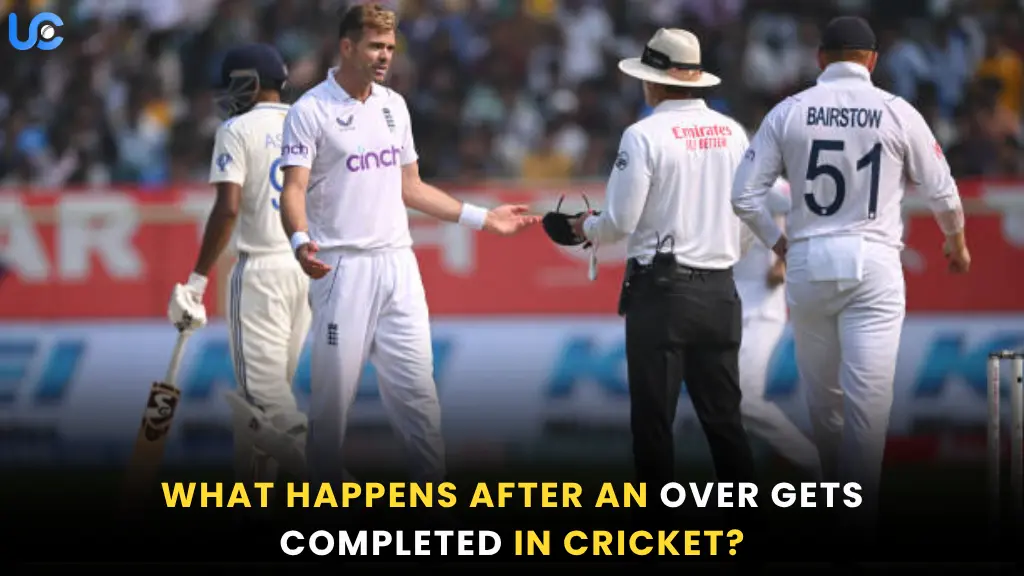
The umpires, along with the bowlers and batters, are crucial in controlling the game after an over. The umpire’s task is to implement the regulations, make decisions on appeals, ensure fair play, and maintain the game’s spirit. Additionally, the umpires change their positions after every over. The umpire who was at the bowler’s end previously now goes to the square leg position and takes the bowler’s end. This rotation allows each umpire to officiate from both ends and at the same time reduce the probability that bias or fatigue might affect their decision.
Other Changes
Besides these specific changes, other major changes can also take place at the end of an over. For example, taking this opportunity, the fielding side may depending on the situation and the ability of the particular bowler make alterations to their fielding positions in a strategic way. This is often the time when captains talk to their players, give them advice, and discuss tactics to win the game.
Moreover, the break between overs comes as a small lull in the excitement of the game. The fielders may take this chance to sip water, think, and get ready for the next deliveries. The players may also have a quick chat, share a laugh, or analyze the progress of the game during this time. The socializing and relaxing moments not only enhance the overall vibe of the game but also serve as a respite from the competitive nature of cricket.
Conclusion
The fielding team and the bowling team in cricket change places after the completion of an over, but the batsmen stay in their positions. Umpires change places so that they can make decisions from different ends of the pitch. Such moves allow bowlers to change their tactics according to the varying conditions of the pitch while the batsmen continue to play from their respective ends.
Players have a short break during which they can refresh themselves and talk to one another, and the captains and fielders can also make adjustments in their tactics. Understanding what happens after an over can endear the strategic and dynamic aspects of cricket to us, thus making it more entertaining for both players and spectators.