
Cricket is one of the sports that have been most affected by the new technologies used for their plays. Just like the game and the technology, a few other things still give the gentleman’s game a hard time.
Bad light is one of them that stops the match and infuriates not only the players but also the spectators.
So, what does bad light actually mean? And what rules apply to it? Let’s now dive into the definitions and conditions of bad light in cricket.
Bad Light rules in Cricket
“Bad light stops play.” You probably heard this phrase while watching cricket, particularly during a Test match.
Read Also:- What is The Power Surge Rule And How Does It Work?
So, what is bad light exactly? And what makes it force the game to come to a standstill?
Actually bad light means that the daylight has gone down to a level where the players are not able to see the ball with clarity. Also, the red ball is not easily visible in dark settings when the bowlers come in to deliver the ball at a faster pace.
This indeed creates an alarming situation because batters, fielders, bowlers and even the umpires cannot spot the ball if it is moving at a fast pace.
It is a matter of safety, hence the players and umpires are at risk. Therefore, the Marylebone Cricket Club (MCC), the keepers of the game, has laid down rules concerning bad light.
What does the Bad Light Law say?
As per the Laws of Cricket, if the match is to continue at the cost of the whole crowd’s safety due to poor weather or dark sky, then the umpires have the power to call for an end to the day’s play. Furthermore, the decision is strictly up to the umpires and the batting or fielding team cannot interfere with it.
Prior to 2010, the umpires would ask the batters before stopping the game, but the MCC changed the rules to ensure that no one is given an advantage. Hence, after the change in rule, umpires are the sole deciders in stopping matches because of bad light issues.
Nevertheless, it raises the question how the umpires will decide on the bad light situation.
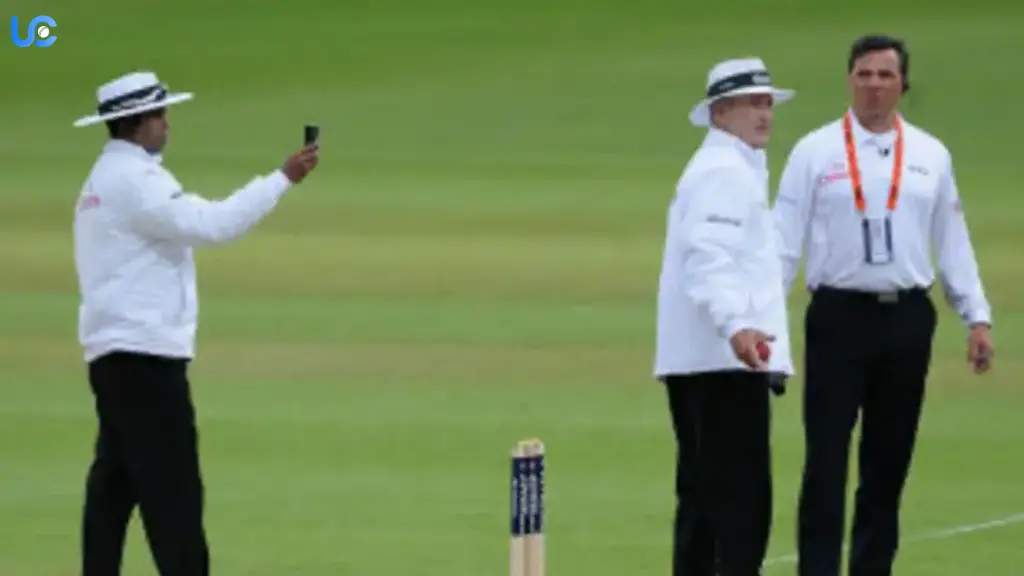
The umpires are provided with a light meter to assist them in coming to the right decision. The light meter is used by the umpires on the field to measure the level of light on the ground.
The light meter indicates the level of light present. If the level is below a certain point that is considered unfit for play, the umpires stop the game forthwith. That level is considered a cut-off point for other days too.
The game is then continued as soon as the light conditions are better than the cut-off reading taken by the umpires.
But what if the light does not improve?
In that case, the umpires decide to halt the play for that day. But in order to make up for the lost overs, the match will start earlier next day.