

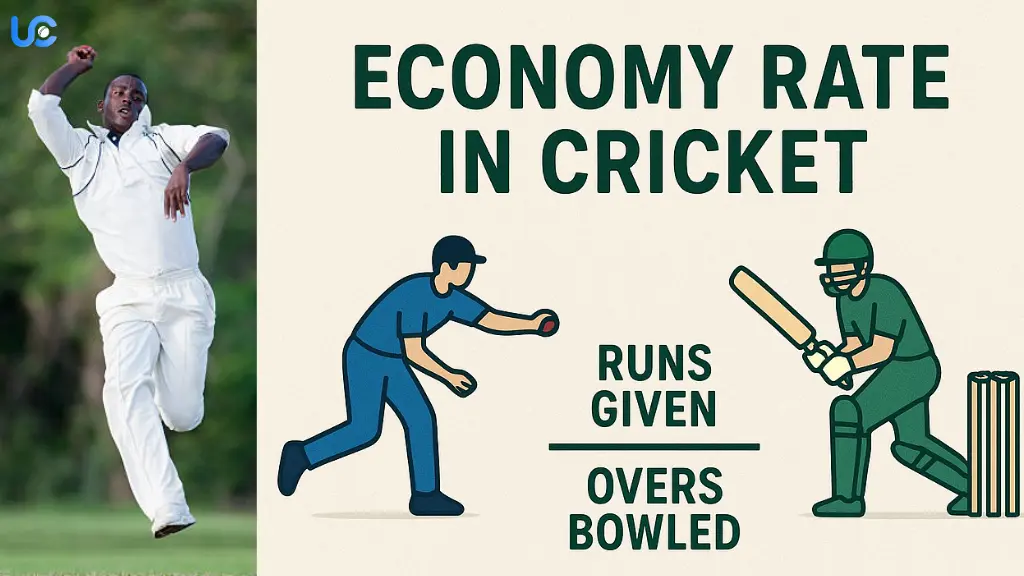
The economy rate in cricket is the mean number of runs given away per over bowled. It is a very useful measure of the effectiveness of a bowler, particularly in limited-overs games.
An econometric greater than average indicates that the bowler did a good job in stopping the scoring of runs by the other team, and vice versa. Hence, in ODI and T20 cricket, this statistic has more significance attached to it. The reason being, in these formats bowlers are expected to work their magic of restricting runs while the opposite team is trying to do the exact opposite.
Even though there are no certain rules, it is generally accepted that in ODI cricket an economy of less than five is a good return. In Twenty20, anything below seven runs per over is considered to be just about acceptable.
Read Also:- What Is Bowling Average In Cricket?
One thing to keep in mind is that byes and leg byes are not included in the run total against the bowler. This means the player’s economy rate is not affected by these extras. On the flip side, additions such as wides and no balls are counted.
How to Calculate the Economy Rate in Cricket?
The economy rate in cricket is calculated by dividing the number of runs a bowler surrenders by the number of overs bowled.
The Formula :- Economy Rate = Runs Conceded / Overs Bowled
To make it more comprehensible, let’s take an example of Shane Warne’s career.
The legendary Australian cricketer bowled a total of 10642 balls throughout his ODI career which is equivalent to 1773.4 overs. From 1993 to 2005, when he played cricket with a 50-over limit, he let off about 7541 runs.
Now, let’s work out the economy of his career:
When you take 7541 and divide it by 1773.4 you will get 4.25.
In conclusion, it is necessary to learn the method of calculating economy rate in order to assess the bowler’s effectiveness in cricket. This number is important for teams and experts to know when making game plans and selecting players.
Nevertheless, it is critical to keep in mind that this number should be analyzed together with other performance metrics such as bowling average and strike rate in order to have a complete view of the player’s performance.