
Cricket, the game of gentlemen, has undergone an enormous transformation since it was first played. Moreover, the game has witnessed various advances and changes in different aspects of it throughout its journey.
The cricketers have done it all from the batters playing outlandish shots to the bowlers experimenting with various bowling styles.
Amongst these, the case of Kevin Pieterson with his ‘switch hit’ is the most celebrated, and now the world’s attention turns to Suryakumar Yadav for his incredible shots. Zaheer Khan used his ‘knuckleball’ to perplex the batsmen, while Pakistan’s Saqlain Mushtaq resorted to ‘Doosra’ to spice up the already existing spin.
Now, when the talk is about bowlers from Pakistan, one cannot forget the exciting and at the same time the arduous task the fast bowlers had to suffer—aided by the reverse swing.
Now the question that arises is how reverse swing, one of the most controversial and fascinating techniques, in cricket was invented?
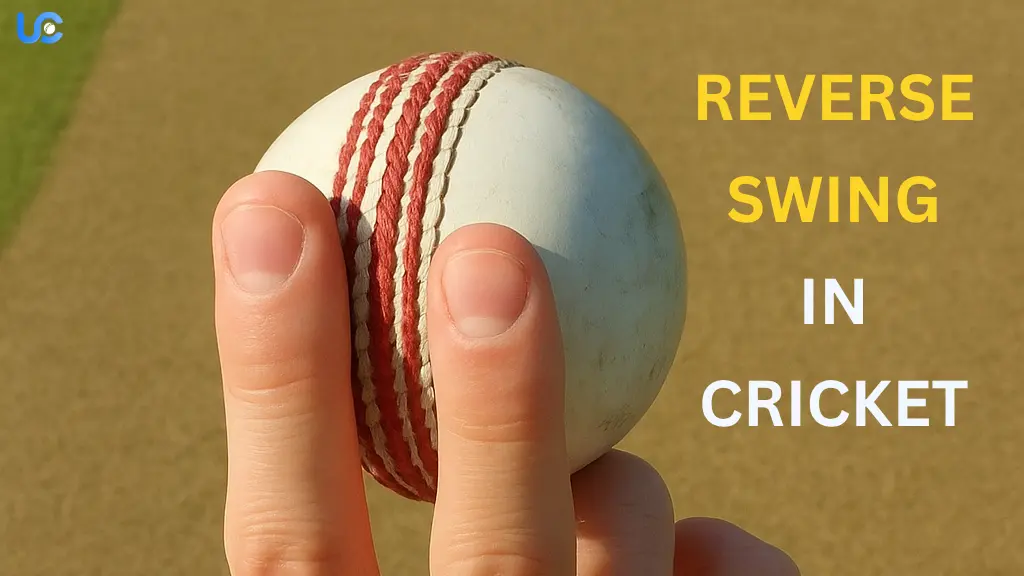
Reverse Swing Bowling is a term used in cricket to describe a special effect that happens to the ball when it is getting old.
What is Reverse Swing Bowling?
As the term suggests, reverse swing, the ball swings in the opposite direction than that of regular swing. For instance, a swing that is moving towards the right-handed batsman is an outswing to the left-handed batsman.
In the case of reverse swing, the ball has already been so much worn out that it can hardly be seen in the air but the batsman is caught off guard.
If you wish to know the tips and tricks of performing the reverse swing delivery, then please check the article given below.
Who invented Reverse Swing?
It is a widely debated topic among the cricketing fraternity who really invented reverse swing bowling. However, the claims mostly point towards Pakistan’s Sarfraz Nawaz being the one who first turned the spell—reverse swing—into reality.
Pakistan is generally known for the fast bowling camps that produce the world-class quicks but Sarfraz was different in this aspect. He was no speedy bowler; his pace was medium. Nevertheless, his case was different as he was capable of swinging the ball in both directions.
The drawback that came along with swinging the ball was the time factor. The ball tends to swing when it is new, mostly in the first session. Afterwards, the bowlers have to wait for the good old times of the ball being 5 overs old, where the conditions for the delivery would be almost perfect.
Reverse swing was almost exclusively used in Asian conditions, where seam bowlers had almost no help. But Nawaz’s entry gave the game a new twist by the introduction of reverse swing.
The reports say that although Nawaz brought the reverse swing to the world, he was in fact taught the art of the reverse swing by his fellow bowler, Salim Mir, in Lahore. The introduction of reverse swing to the batters by Nawaz in the late 1970s followed his discovery that an old ball could swing towards the shiny side instead of moving away.
Thereafter, he passed the trick on to the then Pakistani captain Imran Khan. Khan, in turn, taught the reverse swing to Wasim Akram and Waqar Younis, who, by using in-swinging yorkers, took it to the next level.
The triumph of the Pakistani pacer made other teams aware of this technique, and so it became common among the pacers to the extent that many took this skill’s life very soon.
The advent of reverse swing bowling in cricket made the game much more exciting. The Pakistani bowlers had given every fast bowler a deadly weapon that he could use against the batters.
Over time, many bowlers around the world became versed with the reverse swing bowling technique, which made the batters very difficult to play. Zaheer Khan, Shane Bond, Dale Steyn, and James Anderson are the reverse swing bowlers in modern times who are the best.