
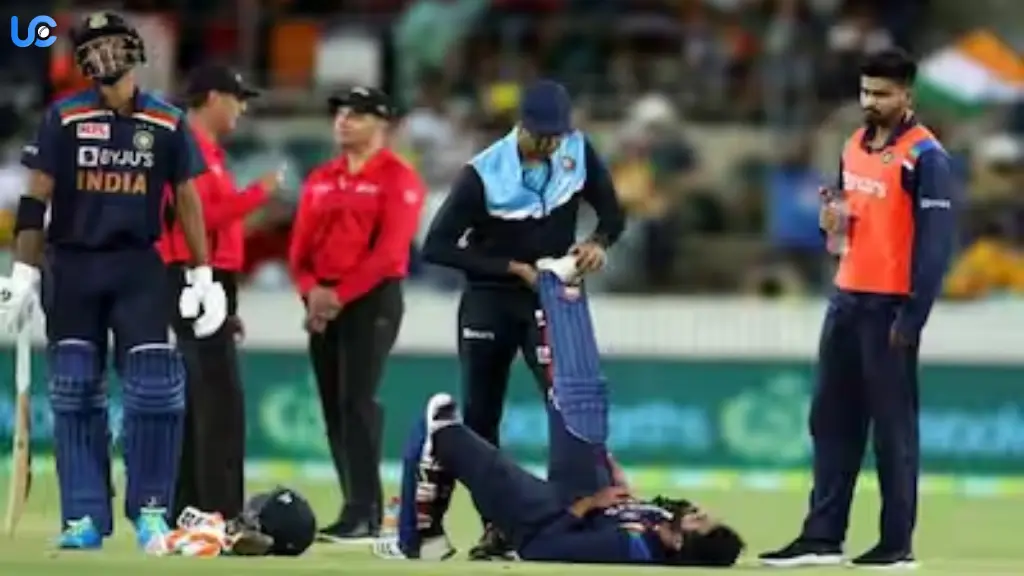
Injuries are an inevitable occurrence in every sport such as cricket. Getting injured is not new and it happens sometimes to the players while they are on the pitch but it does affect a team’s tactics seriously.
In order to tackle this issue, the International Cricket Council (ICC) introduced the rule of concussion substitute.
So, what’s this rule? How does it go about? And how does it benefit the teams?
To put it simply, I will clear every aspect concerning the concussion substitute rule in cricket in this article.
The Need for Concussion Substitute
Cricket has a long history, but still there was no rule for replacing an injured player with a healthy one who would be allowed to participate in the game actively.
The only way a player could be replaced was by a substitute fielder, who as the name implies, could take part only in the field and a concerned player could not bat or bowl or even take part in the fielding.
To give an example, should a bowler incapacitate himself due to injury or by way of fielding, he would have a substitute fielder and yet he wouldn’t be allowed to bowl.
Sounds unjust, doesn’t it?
So to even up things a bit, the ICC introduced a concussion substitute rule in 2019. The rule allows a concussed player to be replaced with a similar skill performer and have a more active role in the game.
But what is the exact working of the rule? Let’s have a look at the ICC’s playing conditions.
ICC Playing Condition for Concussion Substitute
As per the ICC rule, when a player on the field suffers from a head or neck injury, he/she can be substituted by the concussion replacement.
In order to benefit from this rule, the team physiotherapist or physician first evaluates the affected player, and then the manager requests the match referee for a concussion replacement. The team manager will have to indicate several things on a standard form while sending the request.
They consist of:
• Player name who got hurt and suffered the concussion
• Information about the incident causing the concussion
• Confirmation from the team’s physiotherapist or medical representative regarding the player’s concussion
• Name of the replacement player
The match referee will approve the concussion replacement request only after he/she checks all the details submitted by the team manager, provided that the replacement is a player of similar capability.
What is a Like-for-Like Replacement?
So in basic terms, a batter with a concussion must be replaced by another batter, and so on for bowlers – bowler can only be replaced with a bowler.
Though in few situations, an all-rounder can be a replacement for both batter and bowler or the other way around, but with certain restrictions.
Let me illustrate this with the help of an example.
Imagine a bowling all-rounder got a concussion on his head while batting in the first innings and left the field. After the concussion assessment, the team may replace him with a bowler of comparable skills because the injured player would have been the one bowling in the second innings.
In these cases, the match referee will consider the probable contributions of the injured player for the remainder of the match and the contributions made possible by the substitute player.
If the contributions are identical, the match referee will then permit the substitute player to enter the field.
The concussion substitute rule is beneficial for teams and is a solution if the first player on the team gets concussed during the match. Without the rule, the teams would have forced their concussed players to play even when they were already concussed by risking their health.
Therefore, the concussion rule is for the betterment of all the players involved in the game. And it’s good to see that cricket is evolving with time by adopting new rules and regulations.