
Once batters start hitting the balls a lot, the bowlers instantly feel the pressure. They start to employ defensive strategies like bowling out of the batter’s reach, to get some relief.
Occasionally, however, bowlers will lose their lines and length completely and end up bowling wide balls, giving away extra runs. Bowling wide balls can prove to be costly for the bowling team.
But what actually are the wide ball rules? When can an umpire signal a wide ball? In this piece, we will cover the wide ball laws that apply in cricket in detail.
Cricket’s Wide Ball Laws
A wide ball is considered an illegal delivery, which is not counted among the 6 legitimate deliveries of an over. So when a bowler bowls a wide ball, he again has to bowl an extra delivery to conclude the over.
Next, we will see the wide ball rules in detail.
As per MCC Law 22, umpires can declare a ball wide if the delivery thrown by the bowler is beyond the reach of the batter. Nevertheless, the batter has to be in his normal batting position when the ball arrives.
Read Also:- How Long Is A Ranji Trophy Match?
In case the batter moves across and is close enough to the ball, then umpires will not call it a wide.
How do Umpires Judge a Wide Ball?
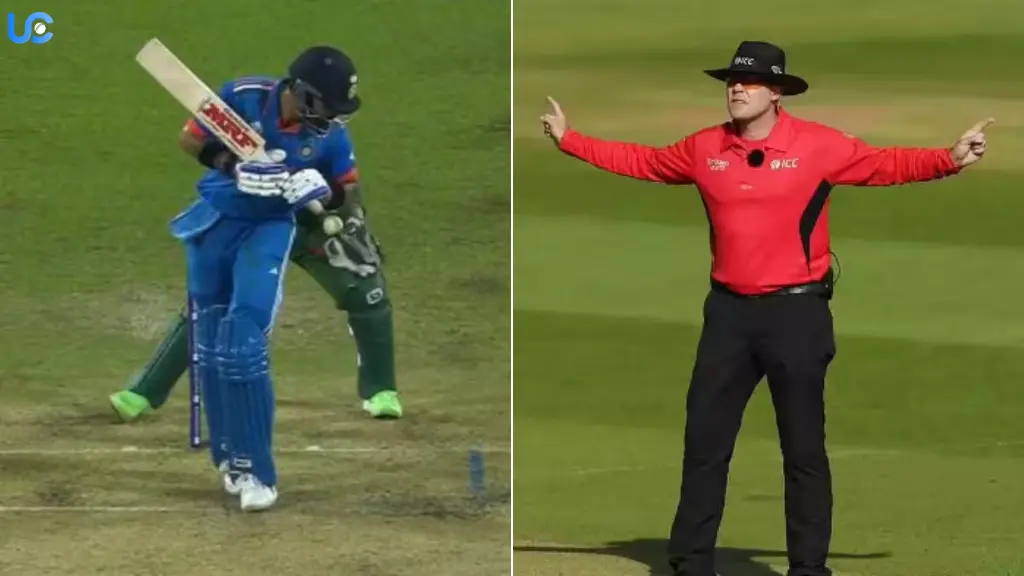
In limited-overs cricket, umpires take into account the wide lines drawn on the batting crease to call wide balls. If the ball goes beyond the wide guideline, then the umpire will signal it as a wide delivery, provided the batter does not make any movements.
In Test cricket or First-Class cricket, wide lines are not drawn on the crease. This is because the wide ball rules are not too strict in the longer formats. Nevertheless, if the umpires think that a certain delivery has gone way beyond, then only that will be indicated as wide.
In addition, umpires also consider a short-pitched delivery as wide if the ball goes over the head of the batter in a straight batting position. This rule is applicable for all formats.
Is there a Penalty for Bowling Wide Balls?
Yes. The moment an umpire indicates a delivery as a wide ball, one extra run is added to the batting team’s scorecard.
The runs will be added even if a batter is out on a wide delivery. Furthermore, if the ball goes to the boundary or any runs taken by batters will also be added together under wide extra runs.
Can a Batter be Dismissed on a Wide Ball?
Even though a wide is not a legal delivery, there are still some exceptions when a batter can be given out. A batter will be declared out if they obstruct the field, hit the wicket, get stumped out, and run out.